
If another driver caused your accident in Florida, damage to your car is paid by that driver’s property damage liability coverage, not by your own personal injury protection. Florida’s no-fault rule covers injuries only. So what to do after a car accident that’s not your fault comes down to two things: document the damage and open a claim with the at-fault driver’s insurer. In practice, where the car gets repaired is your call.
In Florida, the at-fault driver’s property damage liability (PDL) coverage pays to fix your car. Your own PIP covers injuries only. Call the police for any injury or apparent damage of $2,000 or more, then open a claim with the at-fault driver’s insurer and get a claim number. If that claim stalls, your own collision coverage is the backup. A rental is usually part of the at-fault driver’s property damage claim.
What to do at the scene
What you collect in the first hour is what the adjuster works from later. Here’s what to do after a car accident in Florida, in order.
- Check everyone for injuries. If anyone is hurt, call 911 first. The car can wait.
- Move the cars out of traffic if nobody is hurt and they can be driven safely. If you can, take two quick photos of where they stopped first. In a crash with property damage only, Florida law asks drivers to make every reasonable effort to clear a blocked lane, and moving your car doesn’t by itself make you at fault (Fla. Stat. §316.061).
- Call the police when anyone is hurt or a vehicle or other property has apparent damage of at least $2,000. Florida raised that threshold from $500 effective October 1, 2026 (SB 488). Ask for the crash report number before the officer leaves. If no officer comes, FLHSMV accepts a driver self-report on form HSMV 90011S.
- Exchange information. Each driver must give a name, an address and the vehicle’s registration number, and show a driver license on request (§316.062). Ask for the other driver’s insurer and policy number too, and photograph the insurance card.
- Photograph both cars: damage up close and from a few steps back, license plates, the road, traffic signals and any debris.
- Get names and phone numbers of witnesses. A neutral witness matters when the other driver’s story changes a week later.
- Avoid arguing about fault or apologizing. Say what happened and nothing more. Getting rear-ended in stop-and-go traffic on Biscayne Boulevard is the classic case, and the same steps apply.
- Notify your own insurer soon, even if you plan to claim from the other driver. Your policy likely requires prompt notice of any accident, and its conditions section says how prompt.
Is Florida a no-fault state? What that means for your car
Yes, for injuries. Florida’s No-Fault Law requires every vehicle registered in the state to carry at least $10,000 in personal injury protection and $10,000 in property damage liability, according to the Florida Department of Highway Safety and Motor Vehicles.
Personal injury protection (PIP) pays part of your own medical bills and lost income after a crash, no matter who caused it. Property damage liability (PDL) pays for damage a driver causes to someone else’s property, most often another car. Florida’s Department of Financial Services describes it as covering damage to another person’s property, including loss of use, when the policyholder is legally liable (auto insurance overview).
So “no-fault” stops at injuries. Plenty of drivers assume their own policy fixes the car because the state is no-fault. For the car it works the other way: damage follows fault, and the driver who caused the crash owes the repair through their PDL. The system is still in place, too. The latest bill to repeal it, SB 522, died in committee on March 13, 2026.
Injuries are a separate track, and this is where a body shop steps aside. Under §627.736, PIP medical benefits depend on getting initial care within 14 days of the crash, so if anything hurts, see a doctor, and take injury questions to an attorney. This article covers your car, not injury claims, and it isn’t legal advice.
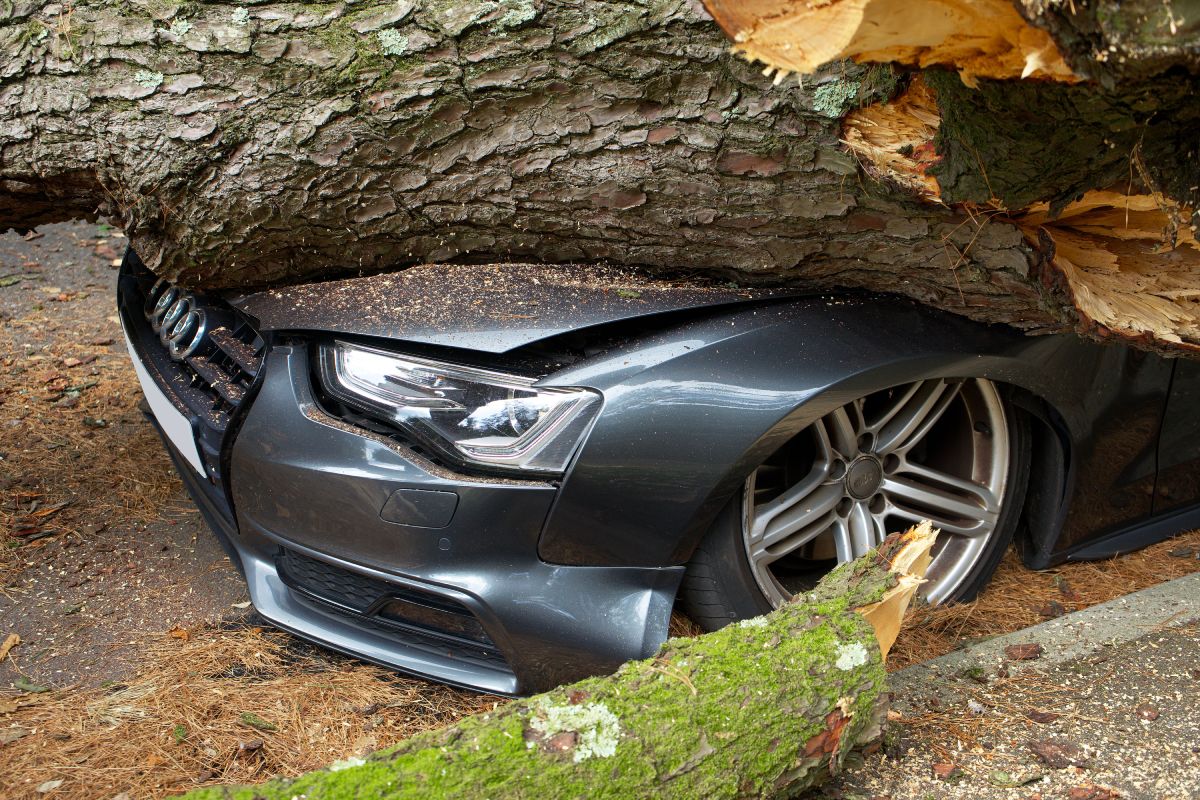
Who pays to fix your car when you’re not at fault
In a not at fault accident, the repair bill belongs to the at-fault driver’s PDL coverage. But “not your fault” isn’t always settled at the scene. Florida uses comparative negligence, so both drivers can share the blame, and your share reduces what the other side pays. Since House Bill 837 in 2023, a party found more than 50% at fault for their own harm recovers nothing in a negligence case (§768.81). That’s one more reason the photos and the crash report matter.
| Route | Who pays for your car |
Your deductible | When it makes sense |
| At-fault driver’s PDL (third-party claim) | The other driver’s insurer, up to their PDL limit | None | Liability is clear and the limit covers the repair |
| Your collision coverage (first-party claim) | Your insurer, which may then seek repayment from the at-fault insurer | You pay it first; recovery is possible but not guaranteed | The other insurer disputes fault or stalls, or the limit is too low |
| Uninsured at-fault driver | Usually your collision coverage; Florida uninsured motorist coverage pays for injuries, not the car | Yes, under your collision coverage | The other driver has no insurance |
Filing a claim with the other driver’s insurance
A third-party claim is one you file against another driver’s policy instead of your own. Contact the at-fault driver’s insurer with the crash report number, their policy number and your photos. You’ll get a claim number, the reference for every call and email after that, and an adjuster, the insurer’s employee who investigates the claim and approves the repair. Ask the adjuster in writing whether the company accepts liability and how it wants the damage inspected.
One Florida rule is worth knowing here. When liability and damages are reasonably clear, the insurer may not recommend that you claim under your own policy solely to avoid paying under its insured’s policy, although it may point out repair options (§626.9743(2)). The repair side, from teardown to the final bill, is covered in how an insurance repair runs at our shop.
If the insurer stops responding, the Florida Department of Financial Services runs an Insurance Consumer Helpline at 1-877-693-5236 and handles complaints against insurance companies.
Using your own collision coverage instead
Collision coverage is the part of your own policy that pays to repair your car after it hits, or is hit by, another vehicle or an object, regardless of fault (more on what your own collision coverage pays for). It’s the backup when the at-fault insurer disputes liability, drags its feet or has a limit too low for the work.
The trade-off is the deductible, the amount you pay before your insurer pays the rest. After it pays, your insurer can pursue subrogation, meaning it seeks repayment from the at-fault driver’s insurer. It may recover your deductible in that process, but that isn’t guaranteed.
When the other driver has no insurance or too little
Florida’s minimum property damage liability is $10,000 for damage to other people’s property in any one crash (§324.022). A driver with the minimum has that amount for everything they damaged, sometimes more than one car, and a repair on a modern car with sensors behind the bumper and structure that has to be measured can exceed it. The rest goes through your own collision coverage or a claim against the driver personally. For the second option, talk to an attorney: Florida shortened its negligence statute of limitations from four years to two in 2023 (House Bill 837; §95.11), so confirm the deadline that applies to your claim.
If you were hit by an uninsured driver in Florida, uninsured motorist (UM) coverage won’t fix the car. UM pays for bodily injury when the at-fault driver has no bodily injury liability coverage or too little of it (§627.727). For the car, collision coverage is the usual route.
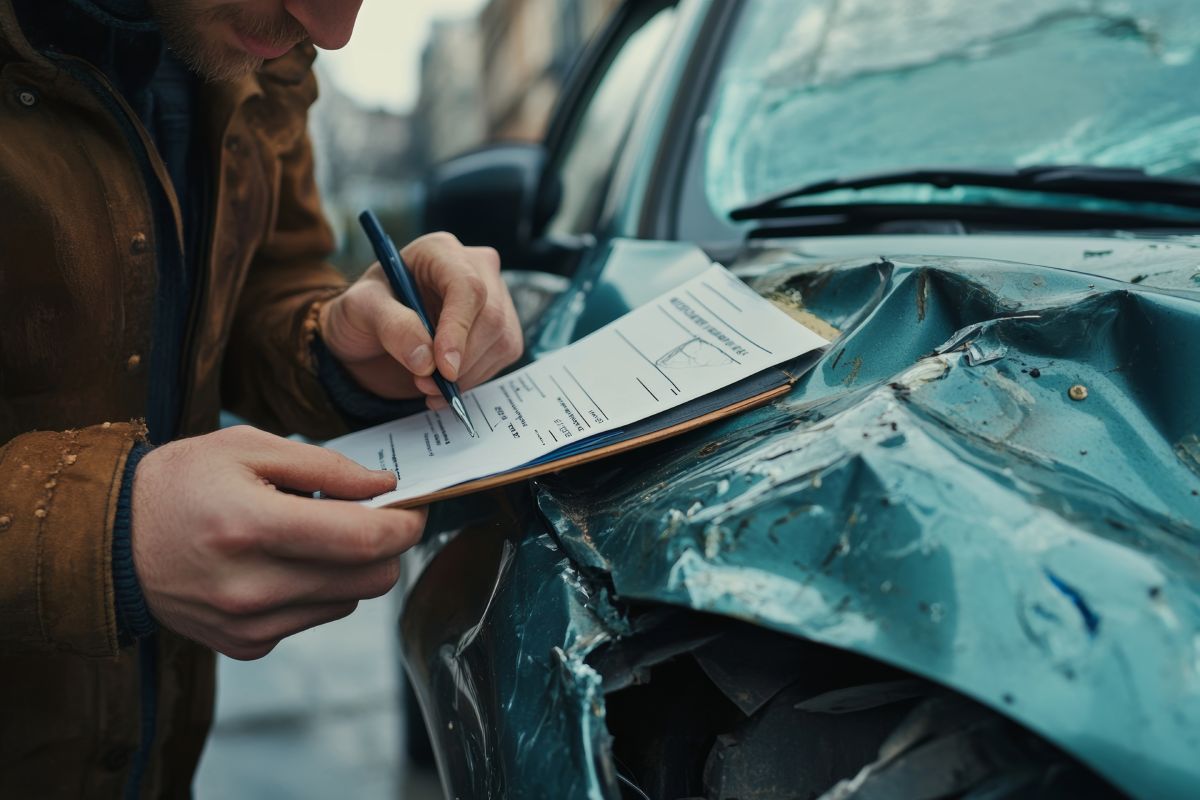
Rental car after an accident that wasn’t your fault
Does insurance pay for a rental car after an accident you didn’t cause? Usually yes, once the other driver’s insurer accepts liability. Loss of use, the time you can’t drive your car because of the damage, is part of what property damage liability covers. In practice, the at-fault insurer typically pays for a comparable rental for a reasonable repair period, or a daily loss-of-use amount if you don’t rent.
Trouble tends to start in two places. Before liability is accepted, the insurer may not approve a rental at all. And when a repair runs long because of back-ordered parts or hidden damage, the approved days can run out before the car is ready. Ask the adjuster in writing for the daily rate, the vehicle class, the number of days approved and how extensions work, and keep every rental receipt.
Rental car reimbursement, an optional add-on to your own policy, pays toward a rental after a covered claim, usually up to a daily and a total cap. It helps when liability is disputed or you repair under your own collision coverage, and your declarations page shows whether you have it.
Getting your car repaired
In practice, you choose where the car is repaired, even when the other driver’s insurer suggests a shop. Our guide on how to choose the shop covers what to look for.
The insurer’s first estimate is often written before anyone takes the bumper off. Hidden damage turns up at teardown, and the shop sends the adjuster a supplement, an addition to the estimate for damage found once parts come off. It also helps to know which parts go on the estimate, since OEM and aftermarket parts can differ in fit and finish.
After a solid rear or front hit, a proper repair checks the structure, not only what you can see. The body should be measured on a frame bench against factory dimensions, and cameras and radar sensors behind bumpers and windshields may need calibration afterward. At AutoBodyLab, ADAS calibration is performed on-site before the car leaves the shop, so there’s no second appointment elsewhere.
Even a proper repair can lower the car’s resale value, and in Florida that loss is claimed from the at-fault insurer. Our article on the diminished value claim explains how.

Will your insurance go up after a not-at-fault accident?
It shouldn’t go up because of that accident alone. Under §626.9541(1)(o), an insurer may not surcharge your liability, PIP, medical payments or collision coverage, or refuse to renew the policy, solely because you were in an accident, unless its file gives it a good-faith basis to decide you were substantially at fault. If it surcharges anyway, it must tell you that you can get the money back by showing, for example, that you were hit from behind by a car going the same direction and weren’t convicted of a moving violation for the crash. Other factors can still change your renewal price.
FAQ
The at-fault driver’s property damage liability coverage pays, not your PIP. Florida’s no-fault system covers injuries, while damage to your car is claimed from the other driver’s insurer. If that claim stalls or the limit runs out, you can repair under your own collision coverage, pay the deductible, and let your insurer try to recover it.
Yes, for injuries. Florida drivers must carry personal injury protection (PIP), which pays part of your own medical bills and lost income regardless of who caused the crash. No-fault does not extend to vehicles: damage to your car is paid by whoever caused the accident, through their property damage liability coverage.
Usually, yes, once the insurer accepts liability. Property damage liability includes loss of use, so the other driver’s insurer typically pays for a comparable rental for a reasonable repair period. Disputes start when liability is unclear or the repair runs long, so ask the adjuster in writing what they approve and keep rental receipts.
It shouldn’t go up because of that accident alone. Florida law bars insurers from surcharging auto policies solely because of an accident unless they determine in good faith that you were substantially at fault. Renewal prices can still move for other reasons, so ask your agent how the claim is recorded and keep the crash report.
Get your car looked at after a not-at-fault accident
AutoBodyLab is at 15150 W Dixie Hwy in North Miami Beach, a short drive from Aventura, Sunny Isles and North Miami. Bring the claim number from the at-fault driver’s insurer. We document the damage, talk to the adjuster about the estimate, and work with GEICO, State Farm, Progressive, Allstate and other insurers. The shop is I-CAR Certified, and the finish on repaired areas carries our Lifetime Limited Paint Performance Guarantee.