
Park a car outside in Orlando for three Florida summers. Come back and look at the hood. If it hasn’t been protected consistently, the paint won’t look dirty — it’ll look dead. Chalky, flat, no reflection. That’s oxidized clear coat, and once it gets to that stage, no amount of washing or waxing brings it back.
UV radiation in Florida degrades clear coat faster than in almost any other state. The single habit that slows it down most is consistent UV-blocking protection — applied before the damage starts, not after. What that protection looks like depends on how the car is stored and how much maintenance time you’re willing to put in.
What Clear Coat Actually Is — and Why Florida Targets It
Clear coat is the outermost layer of your car’s paint system. It’s transparent, typically 1.5 to 2 mils thick, and its job is to protect the color layer underneath from UV rays, moisture, and chemical exposure. It’s also what gives paint its gloss.
UV radiation breaks down the polymer bonds in clear coat through a process called photo-oxidation. The clear coat becomes porous, loses flexibility, and starts to look hazy. In states with mild summers and cloud cover, this process takes many years. Florida accelerates it significantly — the state averages over 2,800 hours of sunshine per year, and UV index readings above 10 are routine from April through October.
Heat compounds the problem. A dark-colored hood sitting in direct Florida sun reaches surface temperatures above 150°F on a typical summer afternoon. At those temperatures, clear coat expands and contracts repeatedly, which weakens it faster than UV alone.
How the Damage Progresses
Clear coat oxidation doesn’t happen overnight, but it follows a predictable pattern.
The first sign is a subtle loss of depth. The paint still looks okay in photos but doesn’t pop in direct sunlight the way a new car does. Most people miss this stage entirely.
The second stage is visible hazing — a faint cloudiness that appears on horizontal surfaces first. Hoods, roofs, and trunk lids take the most direct sun exposure, so they go first. At this point, machine polishing can still restore the surface.
By the third stage, the clear coat has started to peel or flake. No polish fixes this. The only option is a full respray of the affected panels, which costs several hundred dollars per panel at minimum.
Most Florida drivers don’t notice there’s a problem until stage two or three. The progression from healthy clear coat to visible hazing can happen in under three years on an unprotected daily driver.
The One Habit That Actually Makes a Difference
Shade. Consistent, deliberate shade.
Not a product. Not a specific wax or coating — though those help. The single highest-impact change a Florida driver can make is reducing direct UV exposure by parking in covered or shaded spots whenever possible.
A carport cuts UV exposure by roughly half compared to open parking. A garage eliminates it almost entirely during storage hours. For drivers without covered parking at home, tree shade works — with the trade-off of sap and debris — and parking structures at work add up over time.
The reason shade matters more than any single product is cumulative exposure. A car parked outside 10 hours a day in Florida sun accumulates UV damage 365 days a year. A coating slows the rate of degradation. Shade reduces the total hours of exposure. Both together is the most effective approach; shade alone beats any product used without it.
Where Protection Products Fit In
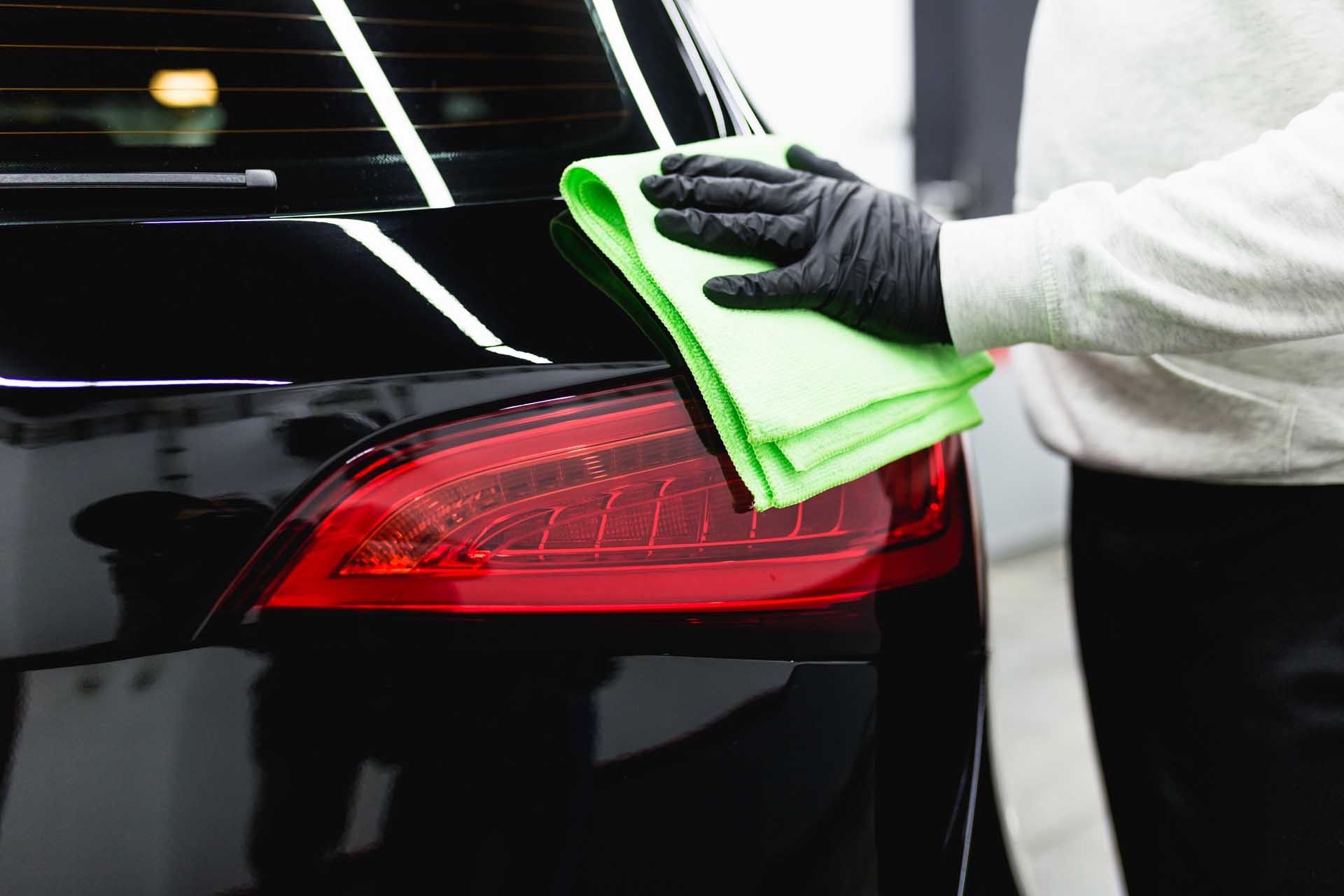
For cars that can’t avoid outdoor parking, UV-blocking protection is the next line of defense. Wax provides a temporary barrier that degrades in Florida heat within six to eight weeks. Ceramic coating forms a harder, UV-resistant layer that lasts two to five years without reapplication.
Neither reverses existing oxidation. Applied to clear coat that’s already hazy, they seal the damage in rather than correcting it. Paint correction — machine polishing to remove the oxidized layer — has to come first. Then protection goes on top of clean, healthy clear coat.
One overlooked option: a quality car cover for vehicles parked outside overnight. It won’t block midday UV, but it reduces the total daily exposure window and keeps the surface cooler in the early morning hours before the sun gets high.
FAQ
Window tint blocks UV from entering the cabin and protects interior surfaces, but it has no effect on exterior paint. Paint protection requires an external barrier — wax, coating, or physical shade.
Every six to eight weeks to maintain meaningful UV protection. Florida heat breaks down wax significantly faster than the three-to-four-month timelines listed on most product labels, which are written for moderate climates.
It depends on the stage. Early hazing can be corrected with machine polishing. Once the clear coat starts peeling or flaking, the affected panels need to be repainted. There’s no product that reverses peeling clear coat.
Florida has one of the highest annual UV indexes in the continental US, combined with heat that regularly pushes surface temperatures past 150°F. That combination accelerates photo-oxidation — the process that breaks down clear coat — faster than in cooler or cloudier climates.