Y our car’s forward collision warning fired perfectly last month — the car ahead braked suddenly, the system caught it before you did. Three weeks later you’re picking up the car after a front-end repair, and that same system is now alerting half a second late, or not at all. The repair looks fine. The paint matches. But something in how the car reads the road has shifted.
This is what uncalibrated ADAS looks like in practice. The repair was complete. The calibration wasn’t.
ADAS calibration restores your car’s cameras, radar, and sensors to factory spec after a collision. It’s required any time a bumper, windshield, suspension, or body panel is repaired or replaced — even if the damage looked minor. Skipping it doesn’t disable your safety systems visibly; it makes them less accurate without warning. Cost runs $250–$500 per system at independent shops, and most collision repairs affect more than one system. Some vehicles show no dashboard warning when sensors are out of calibration.
What ADAS calibration actually is
ADAS stands for Advanced Driver Assistance Systems — the collection of cameras, radar units, and ultrasonic sensors that power features like automatic emergency braking, lane-keeping assist, adaptive cruise control, and blind-spot monitoring. These systems work by continuously measuring distance, speed, and lane position relative to the car’s surroundings.
Calibration is the process of restoring those sensors and cameras to factory specifications after anything has altered their position or alignment. Even a millimeter of shift in a radar unit’s angle changes what the system sees. At highway speeds, that error compounds fast.
Modern vehicles often have six to twelve separate sensors feeding data into ADAS functions simultaneously. After a collision — or any repair that touches the bumper, windshield, suspension, or body panels — some or all of those sensors need to be verified and reset to spec.
Two types of calibration: static and dynamic
How calibration is performed depends on the system and the vehicle manufacturer’s requirements. Most procedures fall into one of two categories, and some require both.
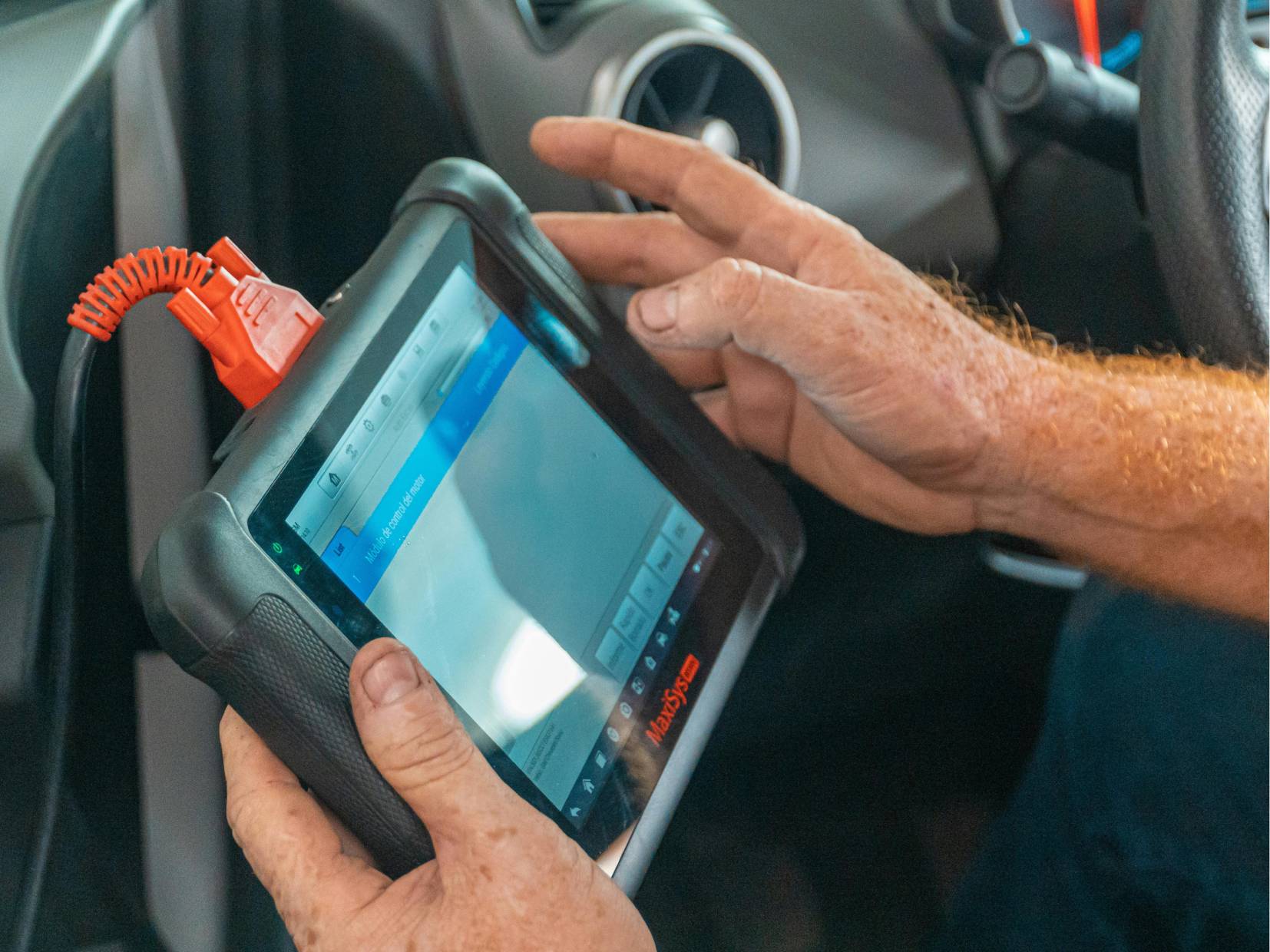
Static calibration is done in a controlled shop environment. The vehicle is positioned on a level surface, and technicians use target boards placed at specific distances and angles in front of — or around — the car. The vehicle’s diagnostic system communicates with the sensors and adjusts their reference points against the targets. The car doesn’t move during this process. It requires a clear, well-lit area with enough space to set targets at the manufacturer’s specified distances, which can be 10 to 15 feet or more.
Dynamic calibration is performed while driving. The technician takes the vehicle on a route that meets specific conditions — certain speeds, certain road types, certain distances — while the system recalibrates through real-world input. Some manufacturers require a combination: static first to establish baseline, then dynamic to confirm under real conditions.
Which procedure your car needs isn’t a choice — it’s determined by the manufacturer. A shop that offers only one method for all vehicles isn’t equipped to calibrate all vehicles correctly.
When calibration is required
The short answer: after any repair that could have altered the position of a camera, radar unit, or sensor — directly or indirectly.
Bumper work — front and rear bumpers house radar units for adaptive cruise control, automatic emergency braking, and parking sensors. Removing, replacing, or even pushing back a bumper cover can shift sensor brackets by amounts that aren’t visible but are significant to the system.
Windshield replacement — the forward-facing camera that powers lane-keeping assist and forward collision warning typically mounts to the windshield or the bracket directly behind it. Replacing the windshield requires removing and reinstalling that camera. Without recalibration afterward, the system’s view of the road ahead is based on a reference point that no longer matches reality.
Suspension and alignment work — ride height and wheel alignment affect the angles at which sensors point at the road and surrounding vehicles. A suspension repair that changes ride height by half an inch changes the geometry of every forward and rear-facing sensor on the car.
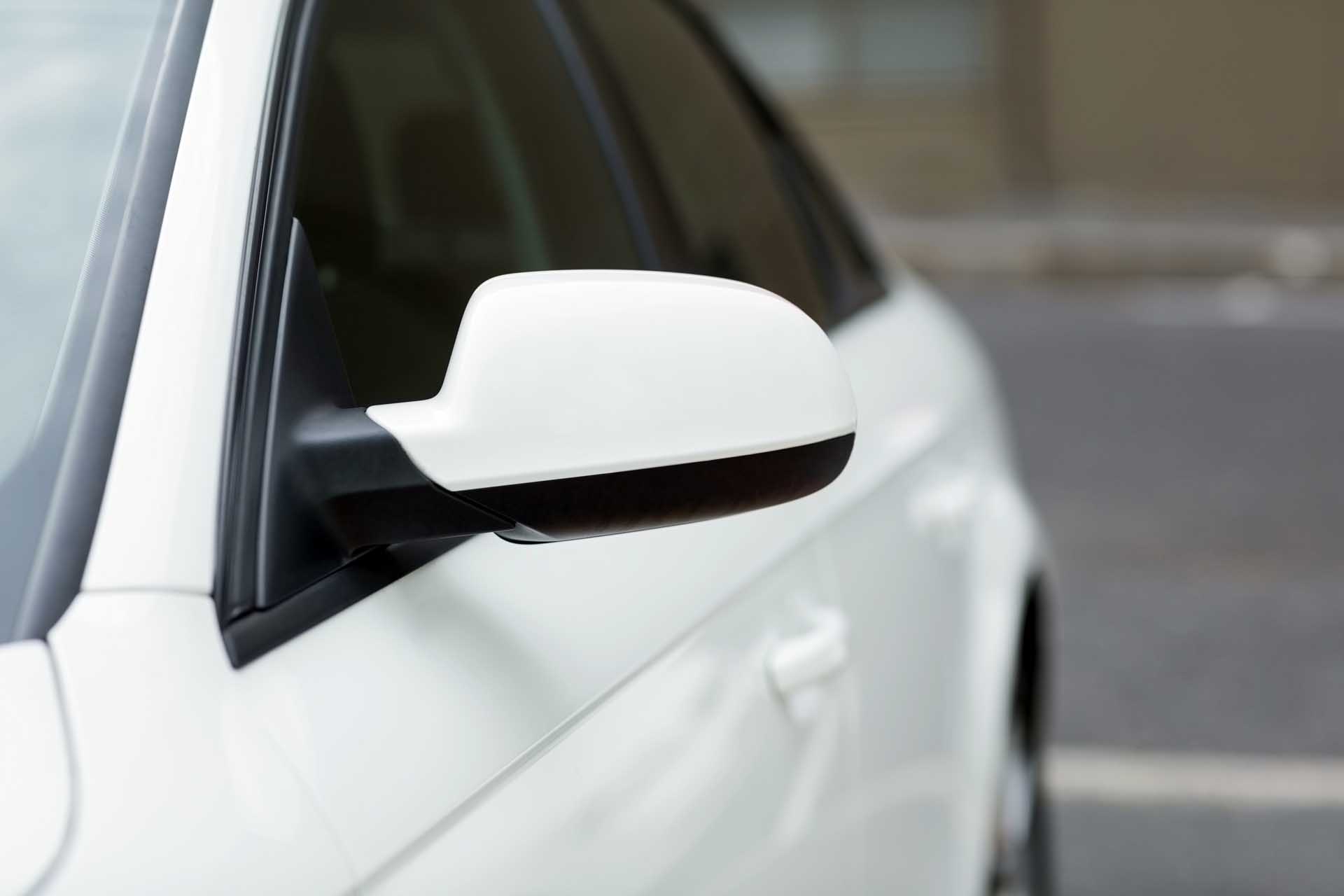
Body panel replacement — side cameras, blind-spot monitors, and cross-traffic alert sensors mount to doors, mirrors, and quarter panels. Replacing any of these components can alter sensor positioning.
Even a minor collision can trigger a calibration requirement if it shifted a sensor mount — even slightly. The damage doesn’t have to look serious for the calibration need to be real.

What happens when calibration is skipped
ADAS systems don’t fail dramatically when they’re out of calibration. They fail quietly, in ways that aren’t obvious until they matter.
A forward collision warning calibrated slightly high may not detect a stopped vehicle until the car is significantly closer than the system was designed to respond. A lane-keeping assist with a shifted camera reference may allow more lane departure than intended before alerting. A blind-spot monitor with a misaligned radar unit may show a clear lane that isn’t.
Critically: some vehicles will not show any dashboard warning light even when ADAS sensors are out of calibration. The car behaves normally in every other way. The only indication is that a safety system is responding differently than it should — which most drivers won’t notice until they need it.
The other practical problem: a mis-calibrated system often generates false alerts — warnings that trigger when nothing is wrong. Drivers learn to ignore them. An ignored warning system is worse than no warning system, because it creates a habit of dismissing alerts at the exact moment a real one fires.
These aren’t hypothetical failure modes — they’re the reason NHTSA tracks crash data specifically for vehicles equipped with Level 2 ADAS systems. The data exists because the agency recognized that driver-assist features, when not functioning correctly, can create a false sense of security without providing actual protection.
What calibration costs in the U.S.
Calibration pricing varies by system, vehicle, and how many sensors need to be addressed.
For individual systems, typical market rates at independent shops run $250 to $500 per system. Dealership pricing is generally higher — $400 to $600 or more — reflecting higher labor rates and, in some cases, proprietary tooling requirements.
By system type, rough ranges: radar-based systems run $300 to $400. Blind-spot monitoring falls in a similar range. Camera systems including lane-keeping assist run $300 to $400. Backup camera and parking sensor calibration typically runs $250 to $300.
After a significant collision, most vehicles require more than one system calibrated in the same visit — because a front-end impact that disturbs the bumper radar may also have affected the forward camera, suspension geometry, or both. Multi-system calibration after more serious repair typically runs $400 to $800 total.
Most of the cost is time and equipment, not parts. Static calibration requires specialized target systems and a properly prepared space. Dynamic calibration requires a technician’s time on the road. Neither can be done quickly or cheaply without the right setup.
Why this matters more every year
A decade ago, ADAS was a feature on luxury vehicles. Today it’s standard equipment on most new cars across most price points. Lane-keeping assist, automatic emergency braking, and rear cross-traffic alert appear on base trim vehicles from nearly every manufacturer.
This means the proportion of vehicles that require ADAS calibration after any significant repair is growing every year. A 2019 vehicle coming in for a bumper replacement is much more likely to need calibration than the same repair on a 2014 vehicle. By 2030, the question won’t be whether calibration is needed after a collision — it will just be part of what collision repair means.
For car owners, the practical implication is straightforward: when a repair involves the bumper, windshield, suspension, or body panels, ask specifically whether calibration is part of the repair scope. If the shop isn’t equipped to perform it in-house, the work needs to go to a facility that is.
FAQ
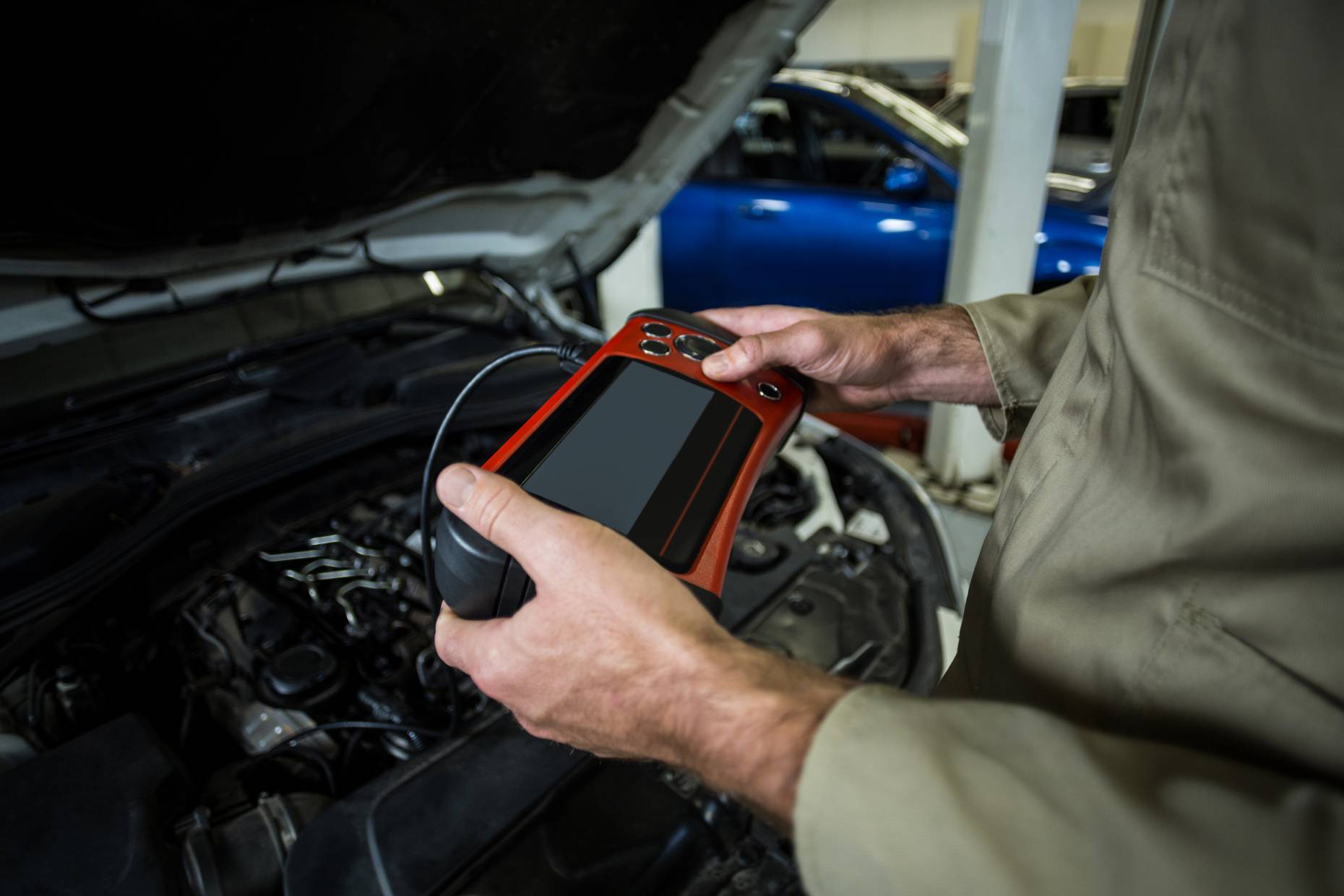
After any repair involving the bumper, windshield, suspension, or body panels, assume calibration is worth checking. A pre-scan and post-scan with a diagnostic tool — standard practice at a properly equipped collision center — will show whether any ADAS fault codes are present before and after the repair.
In most cases, yes — when calibration is required as part of a covered collision repair, it should be included in the claim. The key is that the shop documents the calibration requirement clearly in the repair order. If a shop doesn’t include it, you have the right to ask why.
Static calibration for a single system typically takes 30 to 90 minutes. Dynamic calibration requires additional drive time. A multi-system calibration after significant repair can take half a day when pre- and post-scans are included. It’s not a quick add-on — it’s a procedure.
Technically yes — the car will drive. The risk is that safety systems designed to prevent accidents may not respond correctly when you need them. For a vehicle with active lane-keeping or automatic emergency braking, that’s a meaningful safety gap, not a minor inconvenience.
Having collision work done on a car with ADAS?
At AutoBodyLab, ADAS calibration is part of how we approach any repair that involves bumpers, windshields, suspension, or body panels — not an afterthought. We perform pre- and post-repair scans on every vehicle and handle calibration in-house for most makes and models.