A door ding from a shopping cart. Thirty hail dents after a South Florida storm. A crease along the rear quarter panel from a parking lot tap. Three completely different situations — and in at least two of them, the answer is probably the same: no filler, no paint, no week in the shop.
Paintless dent repair (PDR) fixes dents by massaging the metal back into shape from behind the panel, leaving the factory finish untouched. For the right damage, it costs less and takes less time than traditional bodywork. For the wrong damage, it doesn’t hold — and a shop that sells you PDR when you need conventional repair is doing you a disservice.
Here’s how to tell the difference.
Quick test: is your dent a good PDR candidate?
Run your finger across the dent. If the surface feels smooth and the paint has no cracks or chips, you’re likely looking at a PDR repair. If the center of the dent has a sharp crease — a line rather than a curve — or if you can see bare metal or paint lifting at any point, the job will probably need conventional bodywork, at least partially.
Location matters too. A dent in the middle of a door panel is much easier to access than one near the door’s outer edge or close to a body line. When in doubt, an in-person inspection takes about five minutes and removes the guesswork.
How PDR actually works
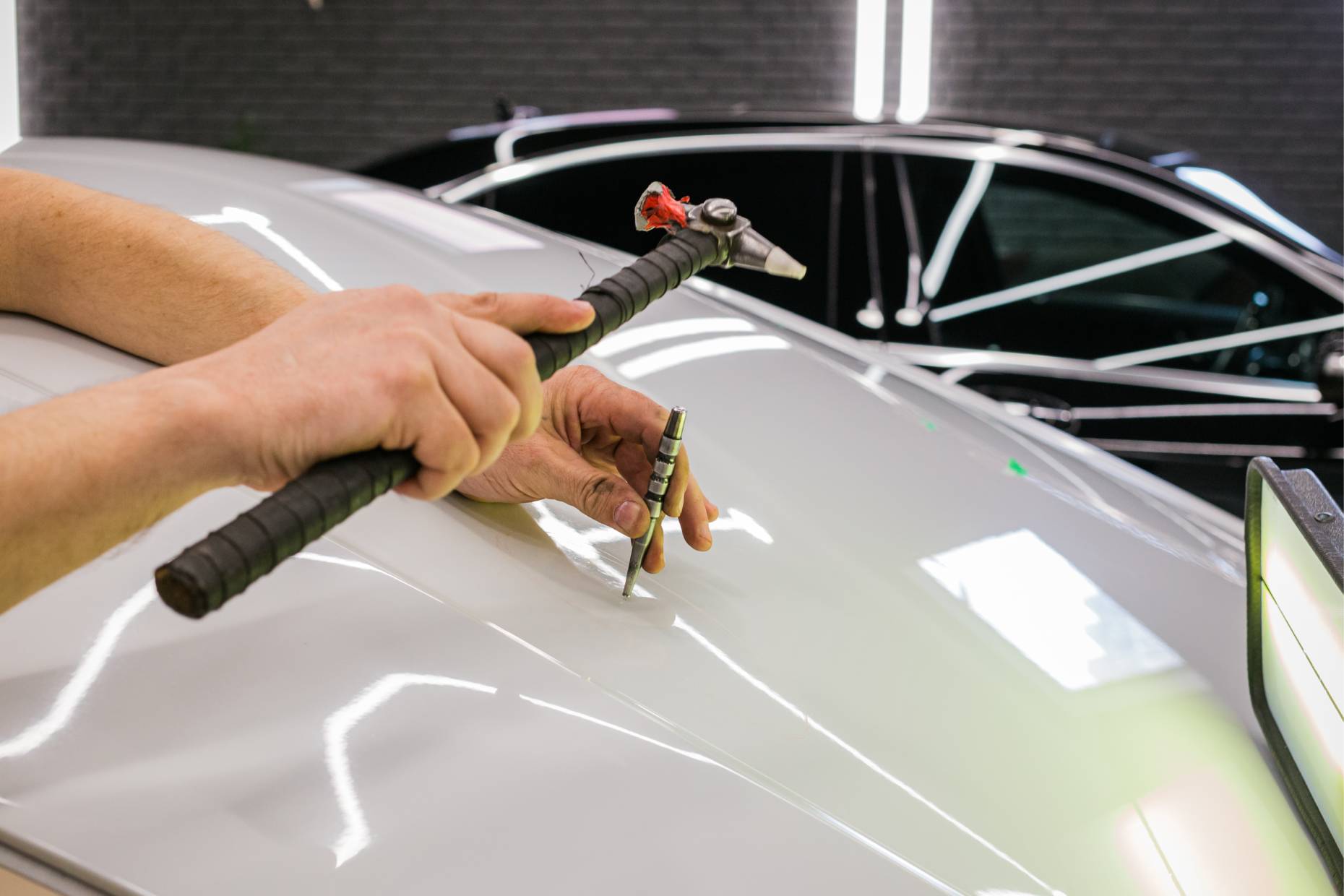
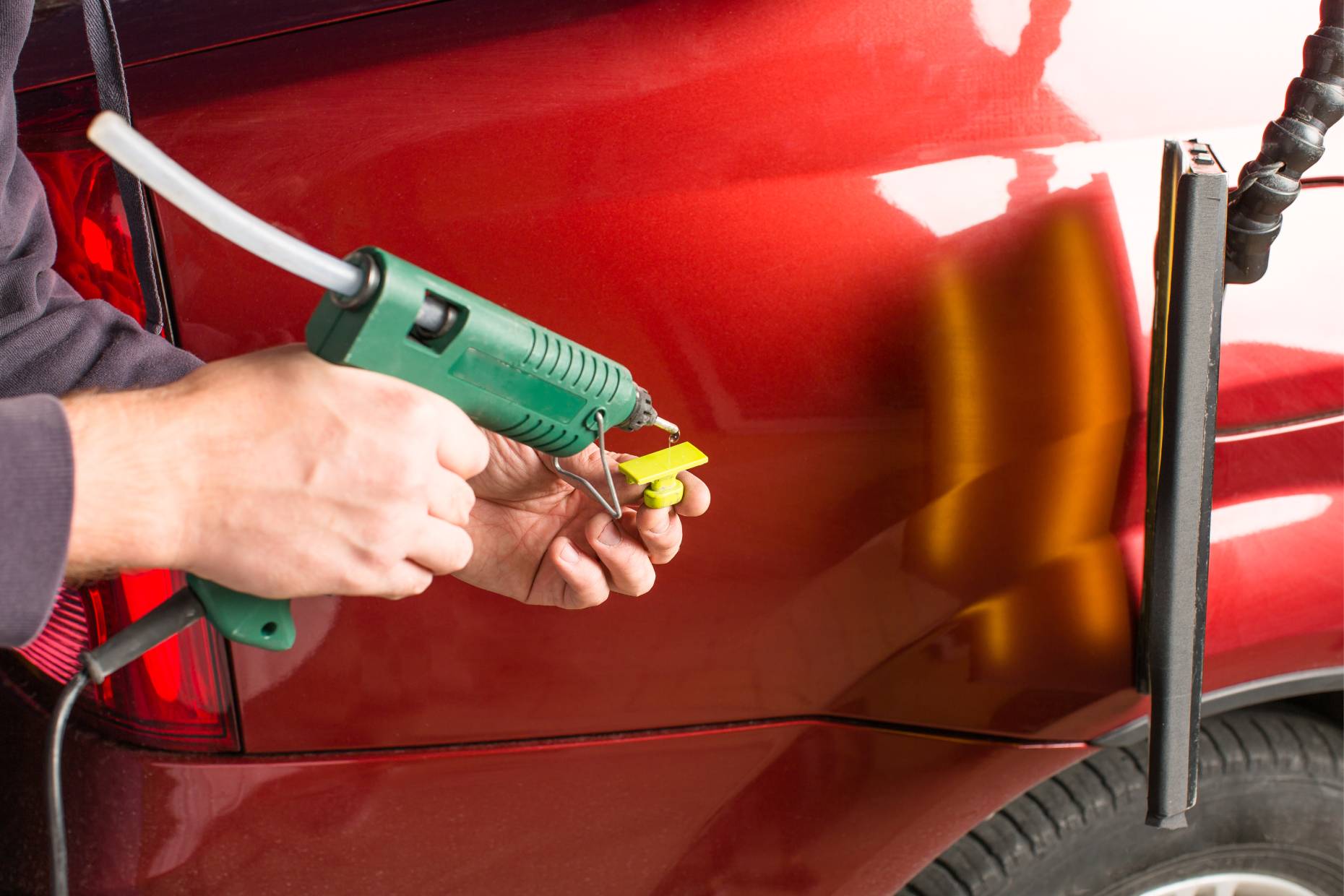
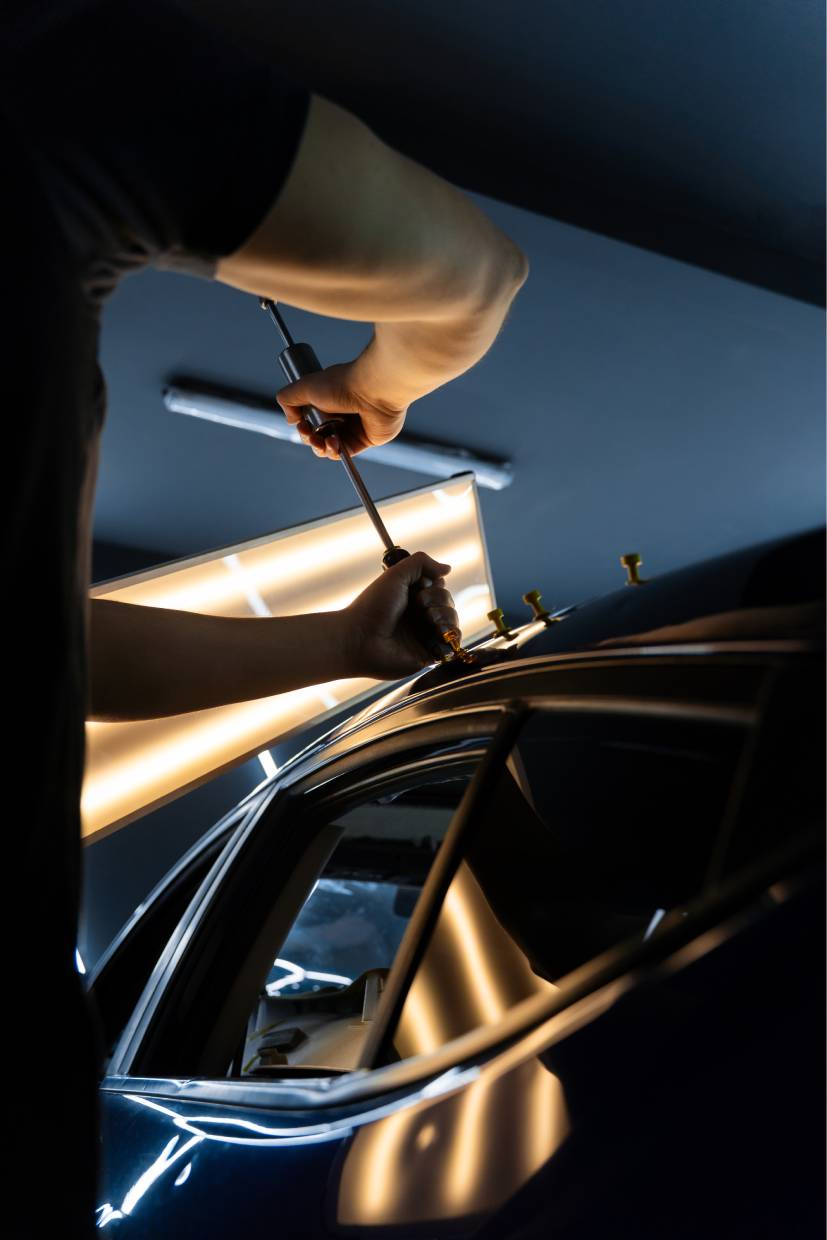
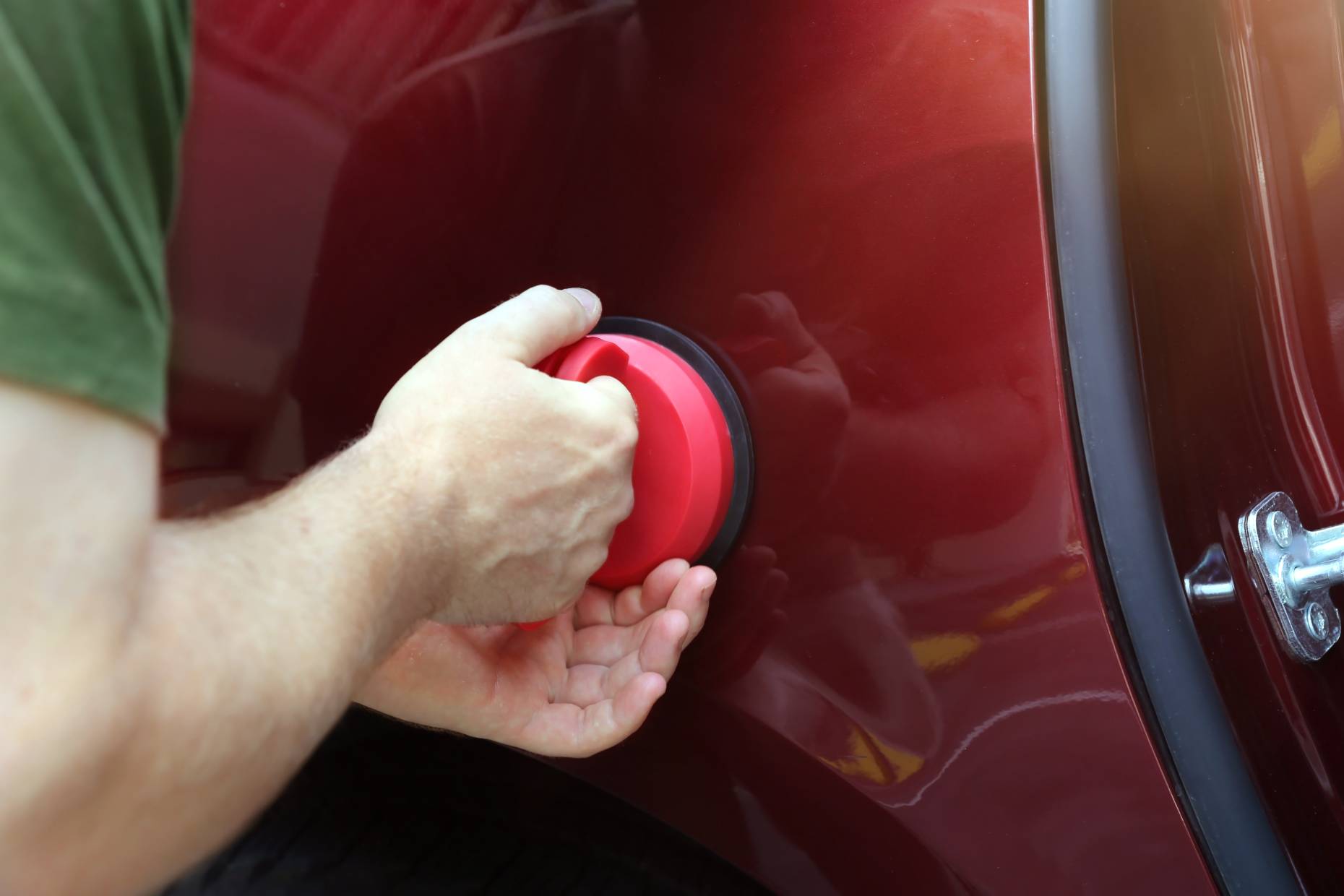
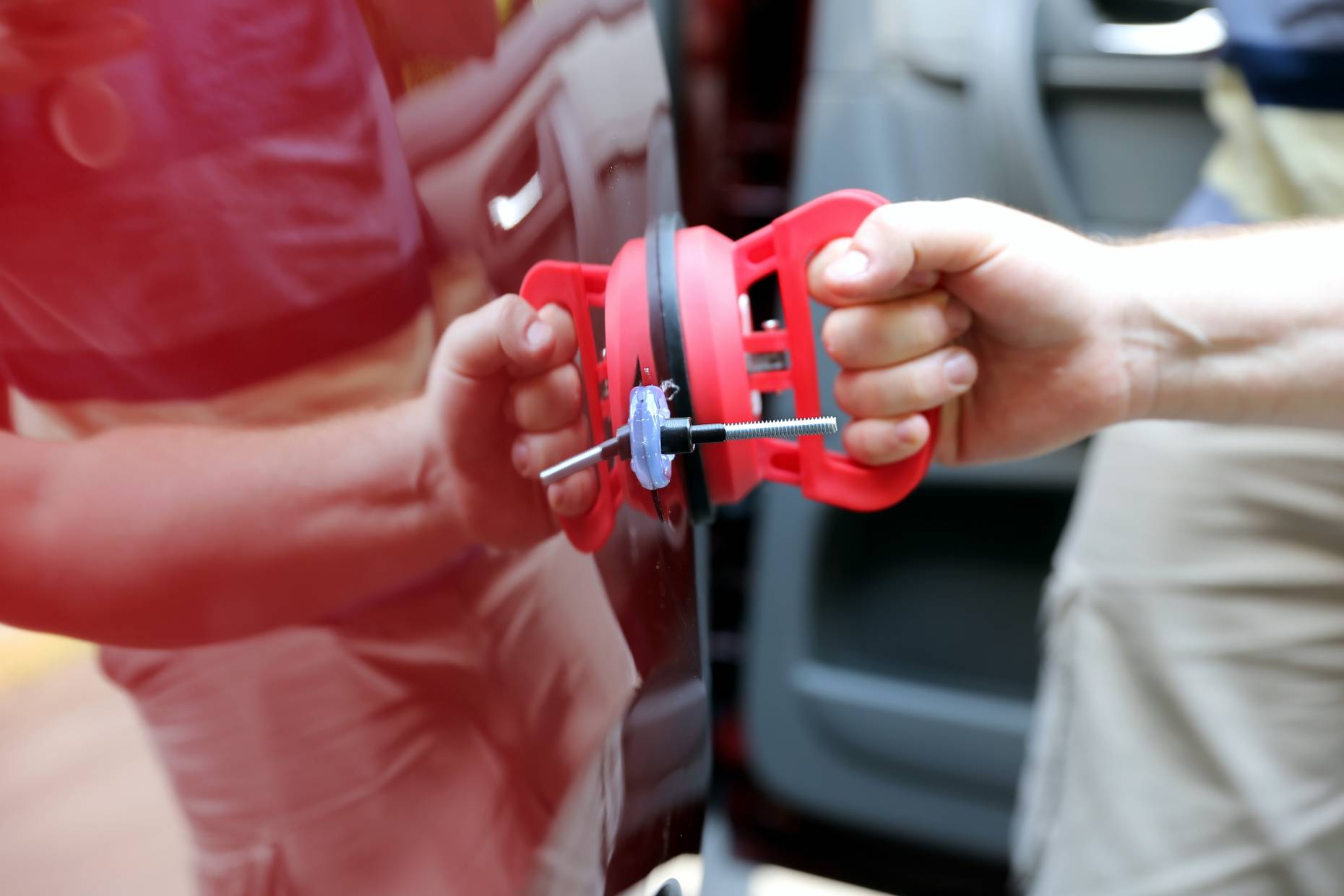
A technician accesses the back side of the dented panel — through a door opening, a removed light assembly, or a dedicated access point — and uses metal rods and picks to gradually push the dent out from the inside. On the exterior, a light board helps read the surface and track progress down to fractions of a millimeter.
No grinding. No filler. No primer or paint. The original factory finish stays intact throughout, which matters more than most people realize: factory paint bonds to the metal differently than refinished paint, and once you repaint a panel, that original bond is gone permanently.
Most professional PDR technicians spend years developing the skill to read panel distortion accurately — it’s not a tool-driven process, it’s a precision technique. The difference between a good result and a mediocre one is almost entirely the person holding the rod, not the equipment.
For small-to-medium dents with undamaged paint, a skilled technician can restore a panel to factory condition in a few hours. Hail damage across a hood or roof — dozens of small dents — typically takes one to three days depending on how many panels are affected.
When PDR works — and when it doesn’t
PDR works when three conditions are met: the paint is intact, the metal hasn’t been overstretched, and the technician can physically reach the back of the panel.
Paint intact is the most straightforward condition. If the impact cracked, chipped, or flaked the paint, PDR addresses the metal but not the surface damage. You’d still need refinishing on top, which changes the cost math entirely.
Metal not overstretched matters because PDR works by returning metal to its original position. When a dent is very sharp — a thin crease, a deep point impact — the metal at that location has stretched beyond what massaging can correct. Traditional body repair with filler handles stretched metal better.
Accessible panel back is a physical reality. Most door panels, hoods, roofs, and fenders can be reached with the right equipment. Some panels with internal bracing close to the surface, or certain pillar areas, limit how closely a tool can work — which limits results.
A practical breakdown by damage type:
Why hail damage in South Florida is a special case
Florida’s storm season runs June through November. Hail events — while less frequent than in Texas or Colorado — do occur, particularly inland during afternoon thunderstorms. When they do, the damage pattern is consistent: dozens of small, round dents across horizontal surfaces. Hood, roof, trunk lid.
This is exactly what PDR was designed for. The dents are typically shallow, the impacts spread out, and the paint usually survives because hailstones hit broadly rather than sharply. Most comprehensive auto insurance policies cover hail damage with no fault assigned — you pay your deductible, the repair is covered.
One thing worth knowing before you file: PDR for hail damage typically costs less than traditional bodywork for the same number of dents. If your deductible is $500 and the repair estimate is $600, running it through insurance may not make sense — and a shop should be honest with you about that math rather than pushing you toward a claim for their benefit.
PDR vs. traditional dent repair: the cost difference
PDR costs significantly less than traditional bodywork for the same damage. A single door ding repaired with PDR typically runs $75 to $150. The same dent handled with conventional body repair — filling, priming, painting, blending — could cost $400 to $800 depending on the panel and vehicle.
Hail damage tells a similar story. A moderately hail-damaged hood with 30 to 50 dents might be $400 to $800 with PDR. Conventional repair on the same panel could reach $1,500 or more, and refinished paint never quite matches factory finish on an aging vehicle.
Speed matters too. PDR doesn’t require paint curing time. A hail-damaged car can often be returned the same day or next day. Traditional bodywork on a similar job takes three to five days at minimum.
What to look for in a PDR technician
When evaluating a shop, ask whether PDR is done in-house or subcontracted out. Some shops bring in mobile PDR technicians for hail claims — which isn’t inherently bad, but means quality control varies. A collision center with certified in-house technicians stands behind the work directly.
Ask to see completed work in natural light. PDR results, good or bad, show up most clearly when you view the panel at a low angle with the sun or a bright light source behind you. A shop confident in its work will have no problem with this.
The one situation where PDR gets oversold
PDR fails drivers when shops apply it to damage that isn’t a good candidate — usually to avoid a more involved repair conversation, or because a mobile PDR operator working a hail claim takes on jobs outside their skill range.
If a technician quotes PDR on a dent with a sharp crease, visible paint damage, or limited panel access, ask specifically: what will the result look like in direct sunlight? A straight answer to that question tells you more than any sales pitch.
FAQ
It depends on depth and shape, not size. A large but shallow dent with smooth edges is often a better PDR candidate than a small but sharp crease.
The opposite — PDR preserves resale value better than conventional repair because the factory paint remains untouched. Repainted panels show up on inspection reports and can reduce trade-in offers.
Yes. When done correctly on suitable damage, the metal returns to its factory position and stays there. The repair is as durable as the original panel.
Not sure which repair your car needs?
Bring it in. At AutoBodyLab, we inspect the damage first, then tell you which method makes sense — PDR, conventional repair, or a combination. If PDR is the right call, we do it in-house. If it isn’t, we’ll tell you why before any work starts.