
Paint correction is the process of removing defects from a car’s clear coat, such as swirl marks, fine scratches, oxidation, and water spots, by carefully polishing away a thin layer of clear coat down to below the damage. It restores a deep, even, reflective finish without repainting. It is the most effective way to bring back a car’s original paint, as opposed to covering defects with wax, which only hides them temporarily.
If your paint looks dull, hazy, or covered in fine spider-web scratches under sunlight, correction is probably what you are looking for. Here is what it actually does, what it can and cannot fix, and how it differs from the polishing and repainting it gets confused with.
What paint correction removes
Most paint defects live in the clear coat, the transparent top layer over the color. Correction targets the ones that sit within that layer:
- Swirl marks. Fine circular scratches from improper washing, automatic car washes, or low-quality drying cloths. Under direct light they show as a spider-web pattern, worst on dark cars.
- Oxidation. UV breaks down the clear coat over time, leaving paint chalky, faded, or dull. It is common in Florida, where year-round sun accelerates it.
- Water spots. Mineral-rich water dries and leaves calcium and silica deposits that etch into the clear coat. Hard water and frequent rain make this one of the most common defects here.
- Buffer trails and light scuffs. Marks left by poor previous polishing or minor contact.
What correction cannot fix is damage that has cut through the clear coat into the color or primer. Deep scratches and stone chips need touch-up or panel repair, not correction, because there is no longer enough clear coat to polish below the damage.
How it works
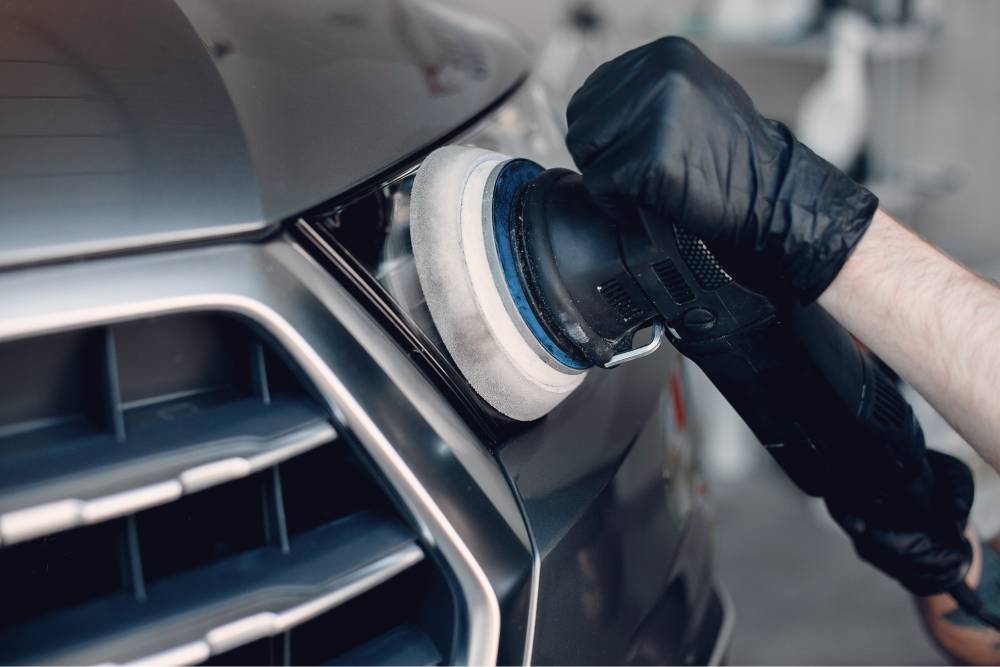
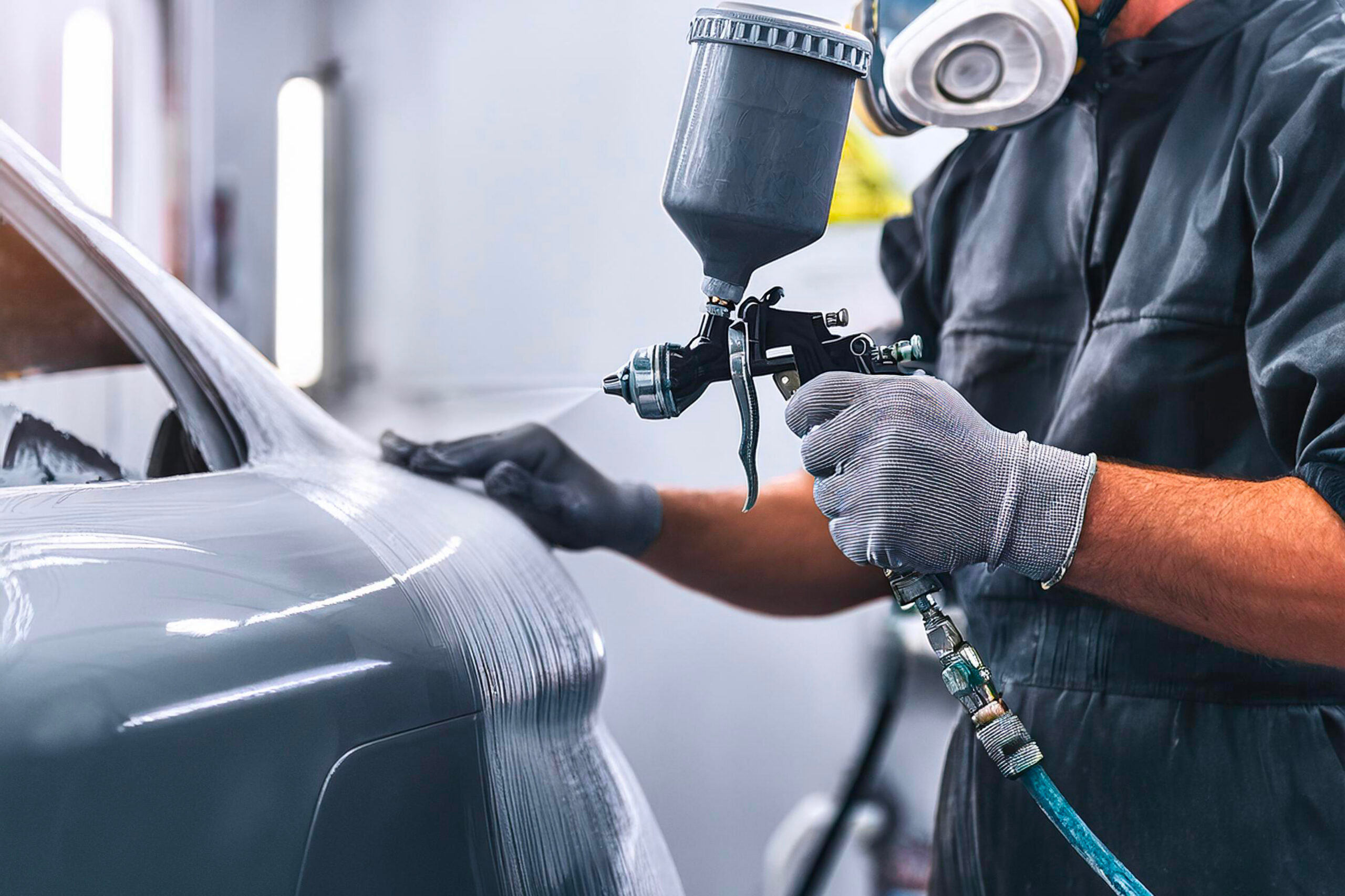
A machine polisher with a cutting compound works through the damaged clear coat, removing a thin and controlled amount until the surface drops below the defects. The scratch or etching is physically gone, not filled. The work is done under calibrated lighting so the technician can confirm each defect is removed rather than temporarily masked.
A modern clear coat is typically 40 to 60 microns thick, and a professional correction removes only a few microns. A paint depth gauge is used before and during the process to keep the clear coat at a safe thickness, which is the line between a proper correction and one that damages the paint.
Single-stage vs multi-stage correction
The number of stages depends on how bad the paint is.
- Single-stage correction uses one polishing step to remove light swirls and minor oxidation, restoring clarity and gloss. It suits paint in decent shape that has lost its shine.
- Two-stage (or multi-stage) correction adds a more aggressive cutting step first, to remove deeper scratches, heavy swirling, and moderate oxidation, followed by a finishing polish. It is for neglected or heavily marred paint.
A technician assesses the depth and density of the defects to decide which is needed. More stages mean more time and cost, so the assessment matters.
Paint correction vs polishing vs repainting
These three get used interchangeably, but they are different things.
| What it does | Lasts | |
| Waxing / polishing (filler products) | Masks defects with oils and fillers | Weeks |
| Paint correction | Physically removes defects from the clear coat | Permanent (defects do not return) |
| Repainting | Replaces the paint entirely | Permanent, but adds a paint record |
Waxes and many “polish” products fill in scratches temporarily. The defects are still there, just hidden, and they reappear as the product wears off. Correction removes them. Repainting is a different category: it replaces the paint rather than restoring it, which introduces color-match risk and shows up on a vehicle history report. Correction preserves the original factory finish, so there is no boundary between old and new paint and no record of work. When done correctly, the result looks like a new paint job, because it is the original paint, restored.
What it costs and how long it takes
Cost depends on the car’s size, the paint’s condition, and the number of stages. A single-stage correction on a standard vehicle typically takes four to eight hours. A full two-stage correction on a larger or heavily defected car can take one to two days. Because the price scales with the condition of the paint going in, an in-person assessment is the only way to get an accurate number.
Why protection should come right after
Correction removes the existing defects, but it does not stop new ones. The moment the car goes back into daily use, Florida’s UV, hard water, road debris, and humidity start working on the bare clear coat again. The right time to protect a corrected surface is immediately, while it is fully decontaminated and defect-free.
That usually means a ceramic coating or paint protection film applied right after correction. A coating bonds to the corrected clear coat and creates a hard, hydrophobic layer that resists UV and makes the surface easier to keep clean, so the finish stays corrected for years rather than weeks. Correction and protection are really two halves of one job.
FAQ
Paint correction is the process of removing defects from a car’s clear coat, including swirl marks, fine scratches, oxidation, and water spots, by polishing away a controlled amount of clear coat down to below the damage. It restores a deep, even finish using the original factory paint, without repainting.
It removes defects within the clear coat: swirl marks, fine scratches, oxidation, water spot etching, buffer trails, and light scuffs. Damage that has cut through the clear coat into the color or primer, like deep scratches or stone chips, needs touch-up or panel repair instead.
No. Waxing and filler-based products mask defects temporarily with oils that wash away. Paint correction physically removes a controlled amount of clear coat to eliminate defects permanently, producing a clarity that wax-based products cannot match.
The corrected finish is permanent, since the removed defects do not return. New contamination will accumulate over time, though, so applying a ceramic coating after correction is what keeps the surface clean and defect-free, especially in Florida’s UV-heavy climate.
Bring the shine back
Auto Body Lab performs single-stage and multi-stage paint correction under calibrated lighting at 15150 W Dixie Hwy in North Miami Beach, on everything from daily drivers to exotics. Every job starts with a paint inspection and a depth check, and we can apply a ceramic coating afterward so the result lasts. We serve North Miami Beach, Aventura, Sunny Isles, Hallandale, and North Miami.