
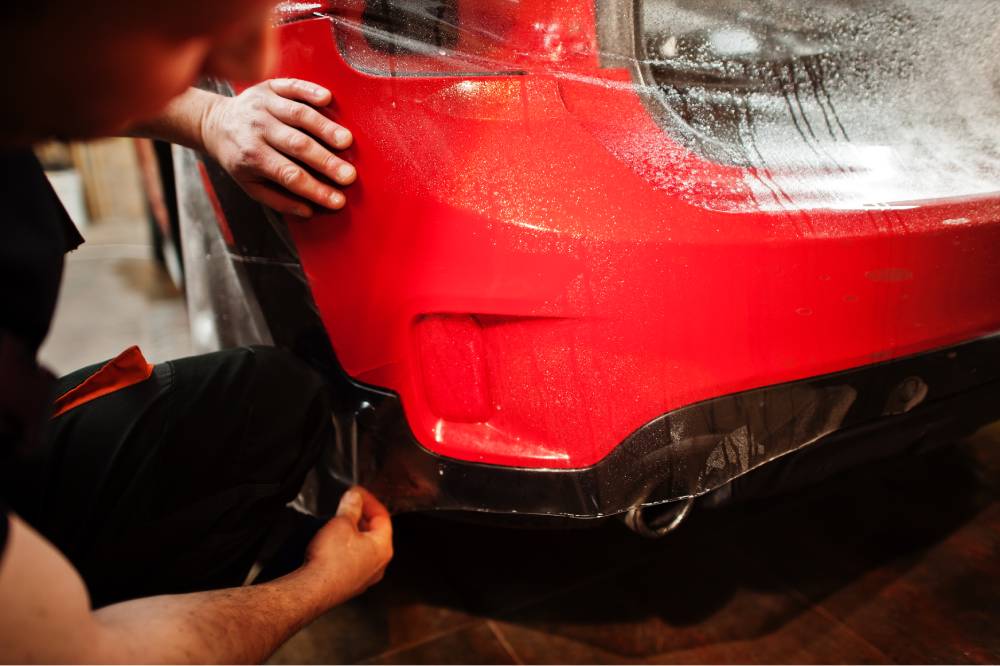

Ceramic coating and paint protection film protect a car’s finish against completely different threats, so most owners are choosing between two problems, not two products. PPF is a thick film that absorbs physical impact: stone chips and road debris that would otherwise chip straight through to bare paint. Ceramic coating is a chemical layer that blocks UV, resists contaminants, and makes the surface hydrophobic, but it does nothing against a chip at highway speed. Most owners of new or high-value cars end up applying both. If you can only pick one, the right choice depends on which threat your car actually faces.
Both get sold under the same “paint protection” label, which is why the confusion never goes away. The short version: film stops impacts, coating handles sun and grime. Below is a side-by-side look at what each one covers, what upkeep looks like, and when paying for both makes sense.
Ceramic coating vs. PPF at a glance
Both are sold under the umbrella term “paint protection,” which is exactly why they get confused. The table below lines up what each one actually does, and adds two things most comparisons skip: what happens to resale value, and how much upkeep each one adds to your routine. Coating locks in gloss and keeps the surface easier to clean. Film prevents the physical damage that would otherwise show up on a pre-purchase inspection years later. Neither replaces the other. A stone chip goes straight through a coating and into bare paint, because a coating is only microns thick, and a coating applied on top of film gets you the UV and hydrophobic benefits without leaving the film to fade or attract grime on its own.
| Ceramic coating | Paint protection film | |
| Main job | Blocks UV and contaminants | Absorbs physical impact |
| Stops stone chips | No | Yes |
| UV / oxidation protection | Yes | Yes, with UV-stable film |
| Hydrophobic / easy cleaning | Strong | Moderate |
| Self-heals light scratches | No | Yes |
| Thickness | Microns, bonded to clear coat | 6–8 mils of film |
| Typical lifespan | 3–5 years, professional grade | 5–10 years |
| Upfront cost | Lower | Higher |
| Resale effect | Preserves gloss and depth of finish | Preserves original paint from chips |
| Upkeep / washing | Rinses clean, less product needed | Normal wash, avoid abrasive brushes near edges |
What ceramic coating actually protects against
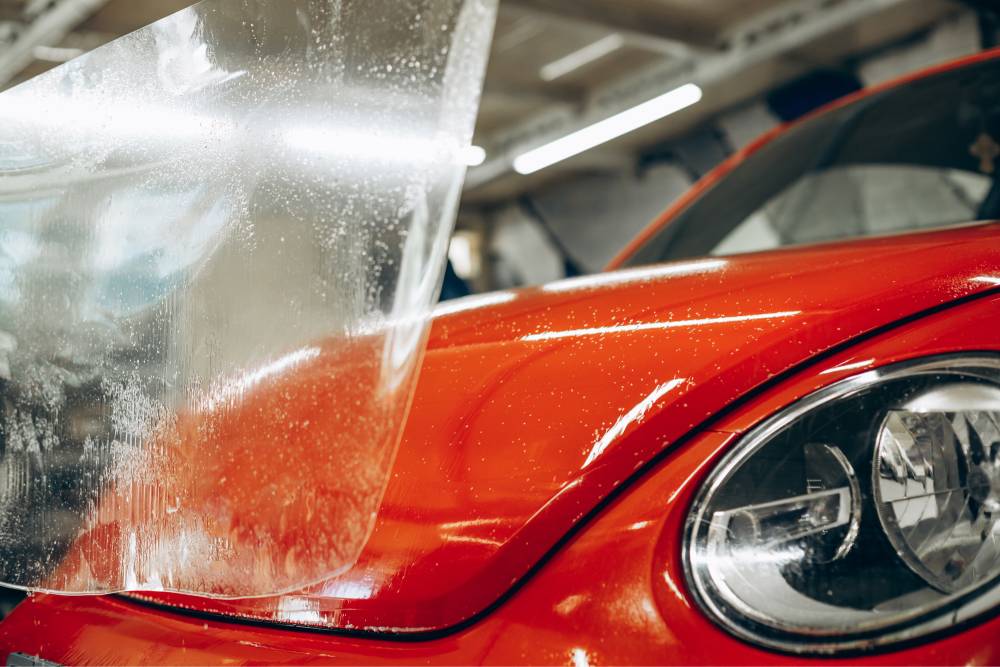
A ceramic coating is a liquid polymer that bonds chemically to the clear coat and cures into a hard, semi-permanent layer, instead of sitting on top of the paint the way wax does. Once cured, it blocks the UV radiation that fades and oxidizes clear coat over time. It also repels water and oily contaminants, so tree sap, bird droppings, and road film have a harder time bonding, and the surface turns hydrophobic, so water sheets off instead of pooling into the hard-water spots common in South Florida.
What it does not do is stop anything with force behind it. A coating adds surface hardness that resists light marring from wash-induced swirls, but a stone at highway speed, a shopping cart in a parking lot, or a scrape against a curb goes straight through it and into the paint. The coating changes how the surface reacts to sun, water, and chemicals. It does not change how the surface reacts to an impact, and that distinction is the entire reason this comparison exists.
What PPF actually protects against
Paint protection film is a clear polyurethane layer, typically 6 to 8 mils thick, applied directly over the paint to absorb impact before it reaches the clear coat. A stone chip that would chip bare paint instead compresses into the film, and on self-healing versions, light scratches in the film’s top coat disappear on their own with heat from the sun or warm water. Film is sold in partial front, full front, and full body packages, so coverage can match how much of the car actually faces road debris.
That is the short version. For the mechanics of how the self-healing layer works and what keeps it working over time, see the full breakdown of how self-healing film works. What matters here is what PPF is not built for: on its own it adds only moderate UV resistance, and it is not the strongest option for hydrophobic water beading, which is where a ceramic coating applied on top earns its place.
Matching the product to the threat
The clearest way to decide is to match the product to whatever is actually damaging your paint, not to whichever product you heard about first.
- Stone chips and road debris on the highway need PPF. Only a physical layer with real thickness absorbs an impact; a coating cannot.
- Sun fading and dulling paint over years in Florida is a ceramic coating problem. It blocks UV directly at the surface.
- Bird droppings and tree sap: both help, but coating makes the residue easier to rinse off before it has time to etch.
- Shopping cart dings and parking lot scrapes on lower panels point to PPF, applied to rocker panels, lower doors, and bumper corners where contact happens.
- Hard water spotting from sprinklers or rain is where ceramic coating wins. Its hydrophobic surface sheds water before it dries into mineral deposits.
- A dull, tired-looking finish on a car that has never had either needs paint correction first, not a coating or a film. Both products only lock in whatever condition the surface is in when they go on.
Cost and value
Pricing for both depends on the vehicle’s size and coverage, plus how much paint correction the car needs first, so treat any figure here as a rough guide, not a quote. As a rule, a partial front PPF package costs less upfront than a full ceramic coating job, since it covers a smaller footprint. A full ceramic coating on a mid-size car typically lands in the low-to-mid four figures, and stacking PPF underneath it usually adds more to the total than the coating does on its own, since film installation is a multi-day labor job.
Cheaper upfront does not mean cheaper overall. A car without PPF that picks up chips and scrapes will eventually need touch-up paint or a partial repaint, which costs more than the film would have. A car without a coating needs more frequent detailing, and in South Florida’s sun, it fades faster, which shows up at resale. For the fuller cost breakdown by package, see is ceramic coating worth it. The honest read on value is that these two products protect different parts of your investment, so pricing them against each other misses the point.
Can you get both, and does the order matter
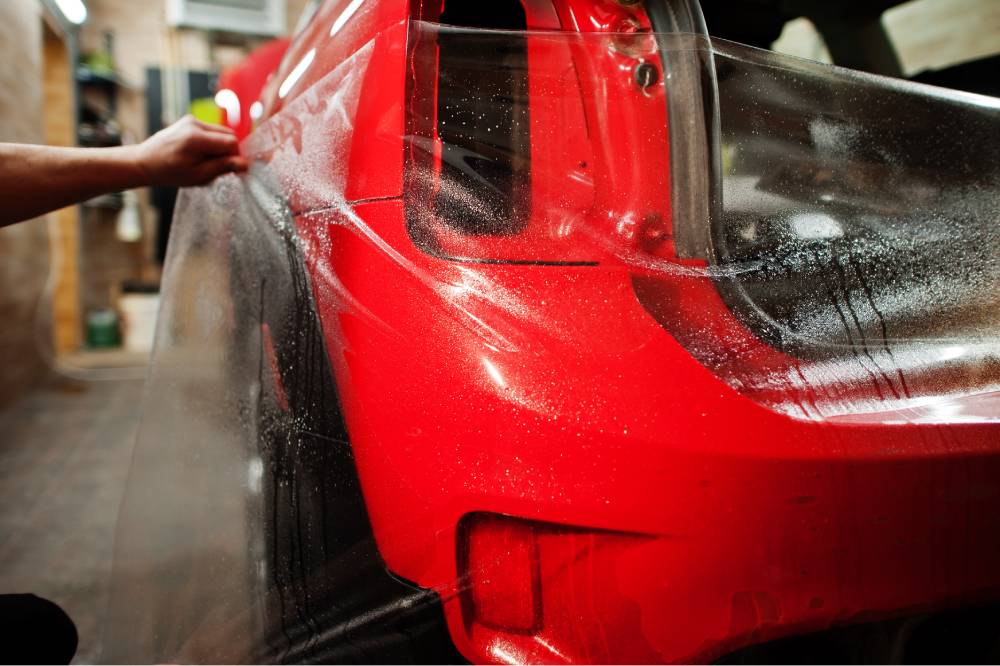
Yes, and for a car the owner plans to keep, doing both is the standard recommendation rather than the exception. The order matters and only goes one way: paint correction first, to remove any existing swirl marks or oxidation, then PPF applied over the corrected paint, then a ceramic coating applied on top of the film.
Correction has to happen before the film goes on, because PPF is optically clear and seals in whatever condition the paint is in underneath it. Film applied over uncorrected paint locks defects in place under a layer that is difficult to remove later. Coating goes on last, and it bonds to the film’s outer surface just as well as it does to bare clear coat, which is why a coated car with film underneath still gets the UV resistance and hydrophobic beading a coating provides. Reversing the order, such as coating first and adding film later, means redoing the work, since the film would need to sit over the coated surface instead of under it, and adhesion and finish both suffer.
Which one fits your car
The right answer usually comes down to how you use the car and what you are actually protecting it for.
- A new luxury car you plan to keep and eventually resell calls for both. Correction, then film, then coating protects the investment on every front: stone chips, UV fading, grime, and resale wear.
- A daily commuter on I-95 or the William Lehman Causeway without the budget for a full wrap does fine with partial front PPF on the bumper, hood edge, and mirrors, covering where stone chips actually happen without paying for coverage the rest of the car does not need.
- A car parked outdoors in North Miami Beach or Aventura, where the main concern is keeping it clean and glossy, is a ceramic coating case. It handles UV fading and makes rinsing off salt air and sap fast, without the added cost of film.
- A car you plan to sell within a year may not be worth the investment for either product, since you will not use up the coating’s lifespan or recover the cost of film at trade-in.
- A car that already has chips or a dull, oxidized finish needs paint correction first, regardless of which protection comes next. Both products perform better and last longer over paint that is already in good condition.
Maintenance differences
Both need specific care to hold up, and mixing up the rules shortens their life. Ceramic coating tolerates regular washing well, including many touchless washes, but abrasive brushes and wax-based products with fillers should be avoided, since they can dull the hydrophobic effect over time. No topping wax is needed once the coating is cured.
PPF needs gentler treatment. Harsh degreasers and incorrectly applied spray sealants can lift seams, and so can a high-pressure wash wand held too close to the edges. Self-healing film heals scratches with heat, so parking in the sun or a warm rinse speeds up recovery, but it will not heal a cut that goes all the way through the film. Edges should be inspected periodically for lifting, since a lifted edge lets water and grime underneath.
FAQ
Film always goes on first, directly over the corrected paint. Ceramic coating is then applied on top of the film, not underneath it, so the coating protects the film’s surface the same way it would protect bare clear coat.
No. A coating is a thin, clear layer that follows the surface underneath it exactly, including existing chips, scratches, or oxidation. It will not fill or disguise damage, and coating over chipped paint just seals the damage in place.
Usually not for the coating, since you will not own the car long enough to use its multi-year lifespan or recover the cost at lease-end. PPF makes more sense on a lease, since lease-end inspections specifically penalize the chips and scratches film prevents.
Protecting your car the right way
Auto Body Lab applies both paint protection film and ceramic coating in the same controlled, dust-free environment used for paint correction, so the order gets handled correctly from the start. Certified installers assess your paint before recommending a package, whether that is partial front film, a full ceramic coating, or both stacked together. We’re at 15150 W Dixie Hwy in North Miami Beach and serve North Miami Beach, Aventura, Sunny Isles, and Hallandale.