
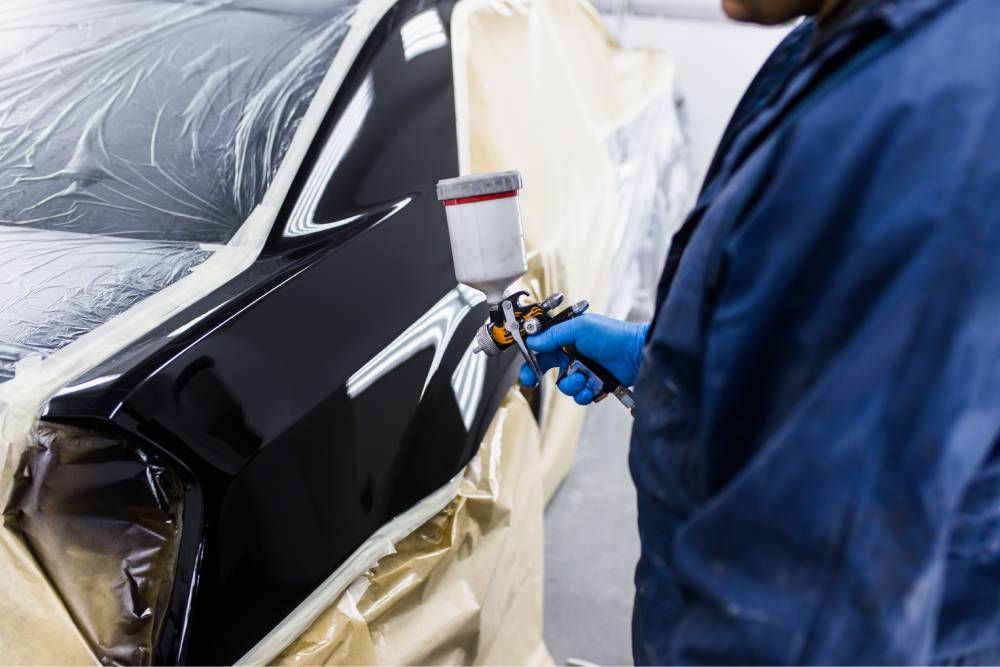
Repainting a car costs anywhere from about $150 for a small spot touch-up to $12,000 or more for a full custom respray on a large or exotic vehicle. A basic spot repair or touch-up usually runs $150 to $500, while a single panel respray, stripped and blended into the surrounding paint, typically costs $400 to $1,200. A full repaint in a standard solid color lands between $1,500 and $4,000, and metallic or pearl paint pushes that range to $3,000 to $6,500. A premium or exotic finish with extra color stages can climb past $12,000.
Those are ranges, not quotes, because the number depends heavily on what the car needs before paint ever goes on. Here is the cost by job type, the factors that move it, and how to tell whether you need a full respray or something smaller.
Car repaint cost by job type
The biggest cost driver is not the paint itself. It is how much surface area gets sprayed and how much prep that surface needs first. A spot repair skips most of the prep work a full respray requires, which is why the gap between the cheapest and most expensive job types is so wide.
| Job type | What it includes | Typical range |
| Spot / touch-up repair | Sanding, fill, color-matched blend on a small area, clear coat | $150 – $500 |
| Single panel respray | Full strip and repaint of one panel, blended into neighboring panels | $400 – $1,200 |
| Full repaint (solid color) | Entire body stripped or scuffed, primer, base coat, clear coat | $1,500 – $4,000 |
| Full repaint (metallic / pearl) | Same scope, plus extra color and pearl coats for the shift effect | $3,000 – $6,500 |
| Full repaint (exotic / premium finish) | Multi-stage tri-coat, matte, or custom formulation with extended booth time | $6,000 – $12,000+ |
A panel respray and a full respray are not the same job scaled down. A single panel can be finished and blended in a day. A full repaint touches every panel, which multiplies the labor, materials, and booth time behind each range above.
What moves the price up or down
Vehicle size and panel count
A two-door coupe has far fewer panels to strip and spray than a three-row SUV or a pickup with a bed and tailgate. Every extra panel adds its own masking time and paint volume, and it usually means another cycle through the booth. Vehicles with more trim and body creases also take longer to mask around cleanly, even when the panel count itself is similar. That is why panel count moves the price within a single job type: a simple, low-panel-count body shell sits at the low end of a range, while a vehicle with more surface area and more separate panels lands higher, even at the same paint tier.
Paint type: solid, metallic, pearl, matte
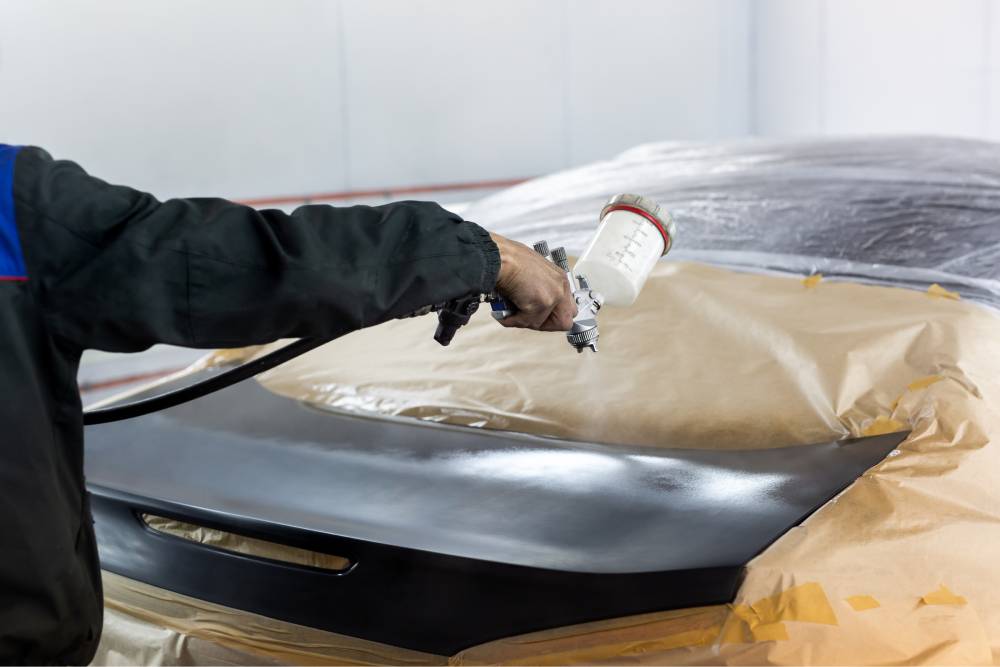
A solid color needs a primer, one base coat, and a clear coat, which is the fastest combination to spray and match. Metallic and pearl finishes add reflective particles that shift with the light, so getting an even, non-blotchy result takes more coats and more careful technique. Tri-coat finishes go a step further, layering a tinted base under a pearl coat and clear coat for depth that a two-coat job cannot reproduce. Matte finishes look simple but are unforgiving: there is no clear coat gloss to hide inconsistencies, so prep and application have to be close to perfect.
Prep work: rust, dents, and body damage
Paint only looks as good as what is underneath it. Rust has to be cut out and treated, not sanded over, or it resurfaces under the new paint within months. Dents and dings need to be reshaped before primer goes down, since paint follows the shape of the metal beneath it. If the existing clear coat has swirl marks, oxidation, or etching but the panel itself is sound, paint correction can restore it without a repaint at all, which is worth ruling out before assuming a full respray is necessary. The more surface prep a car needs, the more labor goes in before a single coat of color is sprayed.
Booth time and paint quality tier
Every coat needs time in a down-draft spray booth to cure before the next one goes on, and rushing that step shows up as orange peel or uneven gloss later. An OEM color-match formula, mixed to the exact code for that make and model, costs more than a generic near-match but disappears against factory panels instead of standing out under sunlight. Higher-tier jobs also include color sanding and buffing after the final clear coat, which levels the finish to a glass-like gloss. Skipping that step is one of the easiest ways a shop cuts corners on price.
Spot repair vs. full repaint: which one you actually need
Most cars never need a full repaint. If the damage is confined to one area, a scuff, a curb rash, a small patch of clear coat failure, a spot repair or single panel respray fixes it for a fraction of the cost, and a skilled colorist can blend the edge so it disappears into the surrounding paint. A full repaint makes sense in a narrower set of cases: the clear coat is failing across most of the car, the paint has faded unevenly from years of sun exposure, or you are changing the color entirely.
Age and future plans matter too. On an older car you plan to keep for years, a full repaint can be worth the investment if the alternative is watching the finish keep deteriorating panel by panel. On a car you plan to sell soon, matching the existing color with a targeted repair usually protects the budget better than a full respray that a buyer may not value at resale. Professional car painting starts with an assessment of exactly how much of the car actually needs work, not a default recommendation to repaint everything.
Custom paint and color change jobs cost more, and here’s why
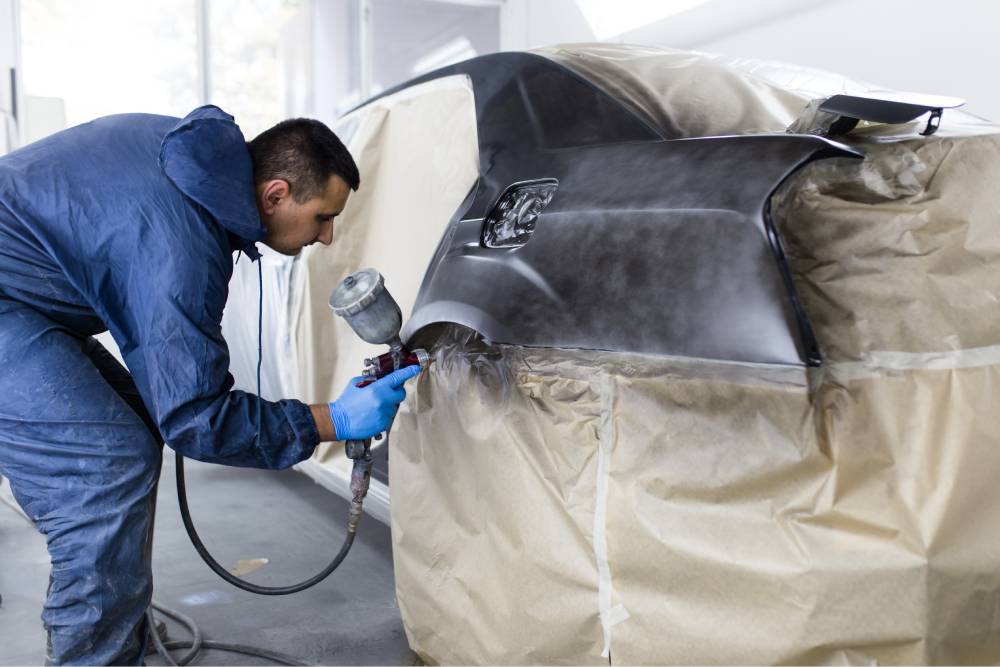
A restorative repaint puts the car back to its original color and finish. A custom paint job or full color change is a different project, and it costs more for reasons that have nothing to do with cutting corners. Changing color usually means stripping the car closer to bare metal or existing base coat rather than just refreshing the top layers, since the new color has to read evenly with nothing showing through from underneath. Custom work often adds extra color stages, candy or flip finishes, or masked graphics, each of which needs its own drying and buffing cycle in the booth.
Vinyl wrap sometimes comes up as a cheaper alternative to a color change, and for a temporary or reversible look it can be. But a wrap sits on top of the existing paint rather than replacing it, so it does not fix underlying clear coat damage, and it needs replacing every few years as the film ages. A custom paint job is permanent and becomes part of the car’s finish, which is why it commands a higher price than a wrap and a much higher price than a standard restorative repaint.
Why paint correction can lower your total cost
Not every dull or scratched-looking car needs paint at all. If what you are seeing is swirl marks, light oxidation, or water spot etching sitting in the clear coat, and the color and primer underneath are untouched, correction can remove those defects by polishing down to below the damage rather than covering them with new paint. It costs less than even a single panel respray in most cases, because it works with the existing factory finish instead of replacing it.
The distinction that matters is depth. Correction only works when the clear coat is still intact. Once damage has cut through to the color or primer, whether from a deep scratch, a stone chip, or rust, polishing cannot fix it and paint is the only option. A straightforward way to think about it: if you can still see color under the defect, correction is worth trying first; if you can see bare metal or primer, you are looking at a repaint.
Getting an accurate quote
Every range above assumes average conditions, and the only way to get a real number is to have the car looked at in person. A technician checks the paint’s actual condition, the extent of any rust or dents, the color and finish type, and how much of the body genuinely needs to be sprayed versus blended. Two cars of the same make and model can land at opposite ends of the same range depending on what a closer look turns up. Most paint assessments take only a few minutes and result in a firm price before any work starts.
FAQ
Repainting only the damaged panel is almost always cheaper. A full repaint only makes financial sense when damage or clear coat failure is spread across most of the car, or when you are changing the color entirely.
A full repaint typically takes several days to a week or more, depending on the amount of prep work, the paint type, and how many coats and booth cycles the finish requires. Metallic, pearl, and custom finishes take longer than a solid color.
Sometimes, if the need for a full repaint traces back to a covered incident like a collision or storm damage, rather than normal wear from age and sun exposure. A shop that documents the damage can tell you whether your claim applies.
Get an accurate repaint estimate
Auto Body Lab provides professional car painting, custom color changes, and paint correction at 15150 W Dixie Hwy in North Miami Beach, using OEM color-match formulas and a down-draft spray booth for a factory-quality finish. We assess the paint and the panel condition in person and give you a firm price broken down by job type, not a single guess. We work with GEICO, State Farm, Progressive, and Allstate when a repaint traces back to a covered claim.