

The detailing shop quoted $1,200. The guy at work says it’s the best thing he ever did for his car. The Reddit thread is split fifty-fifty between people who love it and people who feel misled. So you’re trying to figure out whether ceramic coating actually delivers — or whether you’re paying for marketing.
The honest answer: it depends entirely on what you expect it to do.
Ceramic coating is worth it if you plan to keep your car for two or more years, park outside regularly, and want less time spent washing. It makes washing easier, slows UV damage, and keeps paint looking newer longer. It won’t protect against rock chips, won’t fix existing paint problems, and won’t meaningfully raise your resale value on its own. Most negative reviews come from owners whose expectations didn’t match what the product actually does.
What it actually does well
The real-world benefits that hold up consistently:
Water beads and slides off instead of sitting on the surface and evaporating into spots. This isn’t cosmetic — it’s the main reason coated cars stay cleaner longer between washes. Dust, pollen, and road grime don’t bond to the surface as aggressively, so each wash takes less time and less physical contact with the paint.
UV protection is real and measurable. South Florida paint that parks outside year-round oxidizes and loses gloss faster than almost anywhere else in the country — the combination of intense sun, humidity, and salt air accelerates clear coat breakdown. A ceramic coating slows that process. It doesn’t stop it, but over two to five years of Florida sun, the difference in paint clarity is visible.
The gloss improvement is immediate and lasts. The coating surface is harder and more uniform than clear coat alone, which deepens the paint’s visual clarity. This fades gradually as the coating degrades, which is how you know it’s time for a refresh.
What it doesn’t do — and where most complaints come from
The majority of negative ceramic coating reviews trace back to one source: the gap between what was promised and what the product actually does.
It does not protect against rock chips. The coating is measured in microns — thinner than a human hair. A piece of highway gravel hits with enough force to cut through clear coat and ceramic coating together. Owners who expected chip protection were sold the wrong product. That job belongs to paint protection film.
It does not make the car scratch-proof. “9H hardness” — a marketing rating that appears on many coating products — does not mean resistance to scratches from keys, parking lot contact, or a dirty wash mitt. An improperly performed hand wash on a coated car will still leave swirl marks. The coating requires the same careful wash technique as uncoated paint.
It does not eliminate washing. A common misconception is that coated cars rarely need washing. They need less washing — and easier washing — but a car left unwashed for weeks in Florida will accumulate bonded contamination that even a coated surface can’t shed on its own.
It does not fix existing paint damage. Swirl marks, oxidation, and scratches that exist before coating get locked in under it. If the paint needs correction, that work has to happen first — which adds cost but is not negotiable if you want the coating to look right.
How long it actually lasts
Advertised durability and real-world durability are different numbers.
Consumer-grade coatings typically last two to three years under normal conditions. Professional coatings — applied after proper preparation with higher-concentration products — typically last three to five years. Some professional systems carry longer warranties, though those warranties are usually conditional on specific maintenance requirements.
The conditions matter more than the warranty number. Automatic car washes with brushes degrade coatings significantly faster than hand washing. Harsh detergents strip the hydrophobic layer. In South Florida’s climate, a professional coating maintained correctly tends to deliver three to four years of meaningful performance before a refresh becomes worthwhile. An entry-level coating washed incorrectly may lose its hydrophobic effect within a year.
One practical note on warranties: most require a specific maintenance regimen — pH-neutral soap, no brush car washes, periodic check-up appointments — to remain valid. If you’re not going to follow the maintenance requirements, the warranty period is largely meaningless.
Does ceramic coating increase resale value?
The short answer: not directly.
There’s no reliable data showing that ceramic coating adds a measurable dollar amount to a car’s trade-in or private sale price. Appraisers and dealers consistently report that coating itself doesn’t appear as a line item in valuation.
What it does do is preserve paint condition over time — which has an indirect effect. A car with clean, unoxidized paint needs less reconditioning before sale. Dealers spend money correcting paint on used vehicles before putting them on the lot; a well-maintained coated car may require less of that work. The financial benefit shows up as avoided loss rather than added value.
If you’re planning to sell the car within a year, ceramic coating is unlikely to return its cost. If you’re keeping it three to five years and care about the condition at resale, it’s a reasonable investment in preservation.
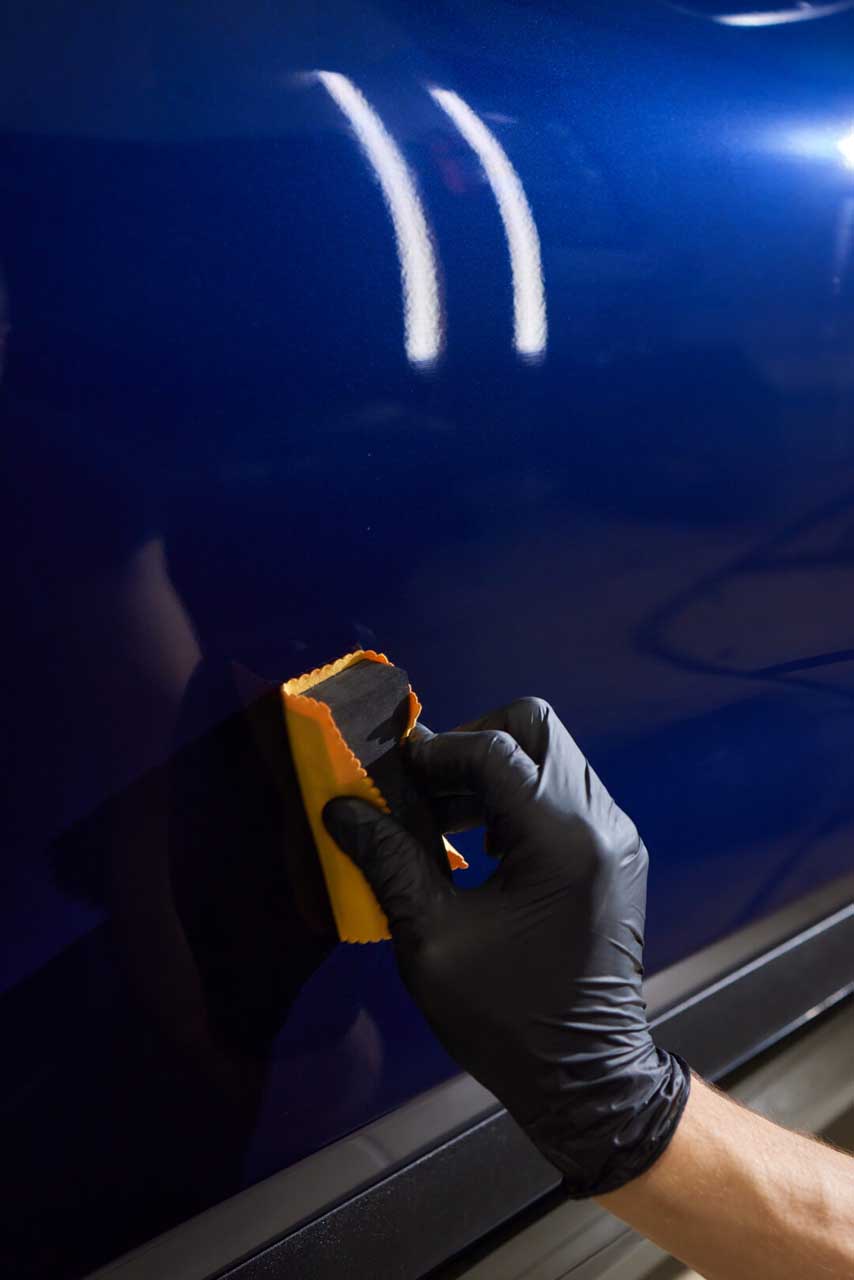
Ceramic coating vs. waxing: the actual cost comparison
Professional wax applied every four to six months runs $150 to $300 per treatment at a detailing shop — roughly $400 to $700 per year. Over three years, that’s $1,200 to $2,100.
Professional ceramic coating runs $700 to $1,850 upfront, with minimal maintenance cost over the same period beyond correct washing.
For a car kept three or more years, the cost comparison often favors ceramic coating — not dramatically, but the math is closer than most people expect. The larger difference is time: wax requires regular reapplication; coating requires correct washing technique but no periodic product.
If you wash your own car and apply wax yourself, the cost comparison shifts in wax’s favor. DIY wax costs almost nothing. DIY ceramic coating costs $50 to $200 in materials but requires the same preparation work as professional application — and the results without that preparation are unpredictable.
When it’s not worth it
Ceramic coating doesn’t make sense in every situation:
If you’re selling the car within six to twelve months, the upfront cost won’t return. If the paint is already heavily scratched or oxidized and you’re not willing to pay for correction first, you’ll be locking in the damage. If you need protection against rock chips and road debris, PPF is the right product. If you use automatic car washes regularly and aren’t going to change that habit, the coating will degrade faster than the warranty period and you won’t get the value you paid for.
The product works as advertised when used correctly. Most of the cases where it doesn’t are situations where either the wrong product was chosen for the goal, the preparation wasn’t done properly, or the maintenance requirements weren’t followed.
What the Florida climate actually means for coating longevity
Florida makes the case for ceramic coating stronger than in most states, for the same reasons it accelerates paint degradation: intense UV, high humidity, frequent rain, and coastal salt in the air.
The coating doesn’t last longer in Florida — it faces more stress than in a mild climate. But the damage it’s preventing is also greater. A car in Minnesota parked in a garage half the year loses paint clarity slowly. A car in Miami parked outside year-round loses it fast. The coating is doing more work in Florida, which means the absence of coating is more costly to your paint over time.
Typical realistic lifespan for a professionally applied coating in Florida: three to four years with correct maintenance. Entry-level coatings or those applied without proper paint prep will fall short of that.
Common questions
Higher-cost professional coatings typically use more concentrated chemistry, carry longer warranties, and require more skilled application. The difference between a $900 coating and a $1,500 coating is usually durability and warranty terms — both will produce similar results in year one. The gap shows up in years three and four.
Water beading that diminishes over time usually means the coating is degrading or has been compromised by incorrect washing products. A detailing shop can assess whether a maintenance topper will restore performance or whether the coating needs to be reapplied.
The gloss improvement and water beading are visible within days of application, once the coating has cured. The protection benefits — slower UV degradation, easier maintenance — show up over months and years.
Is ceramic coating the right call for your car?
It makes sense when the paint is in good condition, the car parks outside regularly, and you’re keeping it long enough to get two to four years of protection. The maintenance requirement is real — correct washing technique, no brush car washes — but the payoff is a car that’s easier to maintain and slower to show its age.
It doesn’t make sense when the sale is coming up soon, the paint needs correction you’re not ready to do, the goal is chip protection, or the washing habits won’t change. In those cases the money goes further elsewhere — correction, PPF, or simply nothing.
If you’re not sure which category your car falls into, a paint assessment takes fifteen minutes and gives you a clear answer before any money changes hands.
Thinking about ceramic coating?
At AutoBodyLab, we assess paint condition before recommending whether correction is needed first and which coating makes sense for your car’s use case. The goal is a result that actually matches what you were expecting — not a sale.