


You call your insurance company after an accident and hear three different terms in one conversation: collision, comprehensive, and uninsured motorist coverage. Now you’re trying to figure out which one actually pays for the repair — and whether filing the claim even makes financial sense.
Collision insurance is one of the most misunderstood parts of an auto policy. Most drivers know they have it. Fewer know exactly what triggers it, what it excludes, and when filing is actually worth it.
Collision insurance pays to repair or replace your car after a crash — hitting another vehicle, a fence, a tree, or rolling over — regardless of who was at fault. It does not cover theft, vandalism, hail, flooding, animal strikes, medical bills, or damage to someone else’s car. For leased or financed vehicles it’s typically required; for paid-off cars it’s optional, and whether it makes financial sense depends on your car’s value and your deductible.
What collision insurance actually covers
The defining characteristic of collision coverage is physical contact between your vehicle and something else — another car, a fixed object, or the ground.
Covered scenarios include hitting another vehicle in a multi-car accident, rear-ending someone, being rear-ended, hitting a guardrail, fence, or tree, striking a pole or barrier in a parking lot, and single-car accidents including rollovers. In all of these cases, collision coverage applies to your vehicle, not to the other party’s property or injuries.
One aspect that surprises many drivers: collision coverage works regardless of fault. If you caused the accident, your collision policy still pays for your car’s repair, minus the deductible. This is what distinguishes it from relying on the other driver’s liability coverage — their policy only pays for your damage if they were at fault and their coverage is sufficient.
What the insurance company pays is based on actual cash value — the market value of your car at the time of the accident, not what you paid for it or what it would cost to replace it with a new equivalent. On an older vehicle, actual cash value can be significantly lower than the cost of repair, which matters when deciding whether a claim makes financial sense.
What collision insurance does not cover
Understanding the exclusions is as important as understanding the coverage, because the gaps are where most confusion happens.
Another person’s vehicle or property. Collision coverage is for your car only. Damage you cause to another driver’s vehicle is covered by your liability insurance, not your collision policy.
Medical bills. Injuries — yours or anyone else’s — are not covered by collision insurance. In Florida, PIP applies to certain injury-related expenses, not vehicle repair costs.
Theft and vandalism. If your car is stolen, broken into, or deliberately damaged, that falls under comprehensive coverage, not collision. A key scratch across your door in a parking lot is a comprehensive claim.
Weather damage. Hail, flooding, wind damage, and falling trees are comprehensive coverage territory. This is a distinction that matters in South Florida, where summer storms bring both flooding and occasional hail. If your car floods during a hurricane, collision coverage does nothing — you need comprehensive.
Animal strikes. Hitting a deer or other animal is also comprehensive, not collision — even though it feels like a collision.
Mechanical failure. If your brakes fail and you hit something as a result, collision covers the impact damage. It does not cover the brake repair itself.
Collision vs. comprehensive: the practical difference
The simplest way to remember it: collision is for crashes, comprehensive is for almost everything else.
Comprehensive covers theft, vandalism, weather, animals, falling objects, and fire. Collision covers impacts with other vehicles and objects. Both have separate deductibles and are purchased separately, though they’re often bundled together.
For Florida drivers, both coverages matter. Collision handles the parking lot incidents, rear-end accidents, and intersection crashes that make up most of the state’s high accident volume. Comprehensive handles hurricane flooding, hail events, and the occasional animal encounter. Carrying one without the other leaves meaningful gaps.
How the deductible works
When you file a collision claim, your deductible is the amount you pay before insurance covers the rest. Common deductible levels are $250, $500, $1,000, and higher.
The math on whether to file is straightforward: if repair costs $1,800 and your deductible is $500, insurance pays $1,300. If repair costs $600 and your deductible is $500, filing gets you $100 from insurance — while adding a claim to your record that could raise your premium at renewal.
For minor damage, the break-even calculation matters. A claim that pays out less than the premium increase it generates over two to three years isn’t worth filing. A good body shop will give you an accurate repair estimate before you make that decision — not after.
A higher deductible lowers your monthly premium but raises your out-of-pocket cost when you do file. The right level depends on how much you can absorb without a claim and how frequently you tend to need coverage.


Should you file a collision claim?
Before calling your insurer, get a repair estimate. The number tells you whether filing makes sense: if the repair cost is meaningfully higher than your deductible, a claim is likely worth it. If the damage is close to the deductible, paying out of pocket avoids a claim on your record and the potential premium impact at renewal.
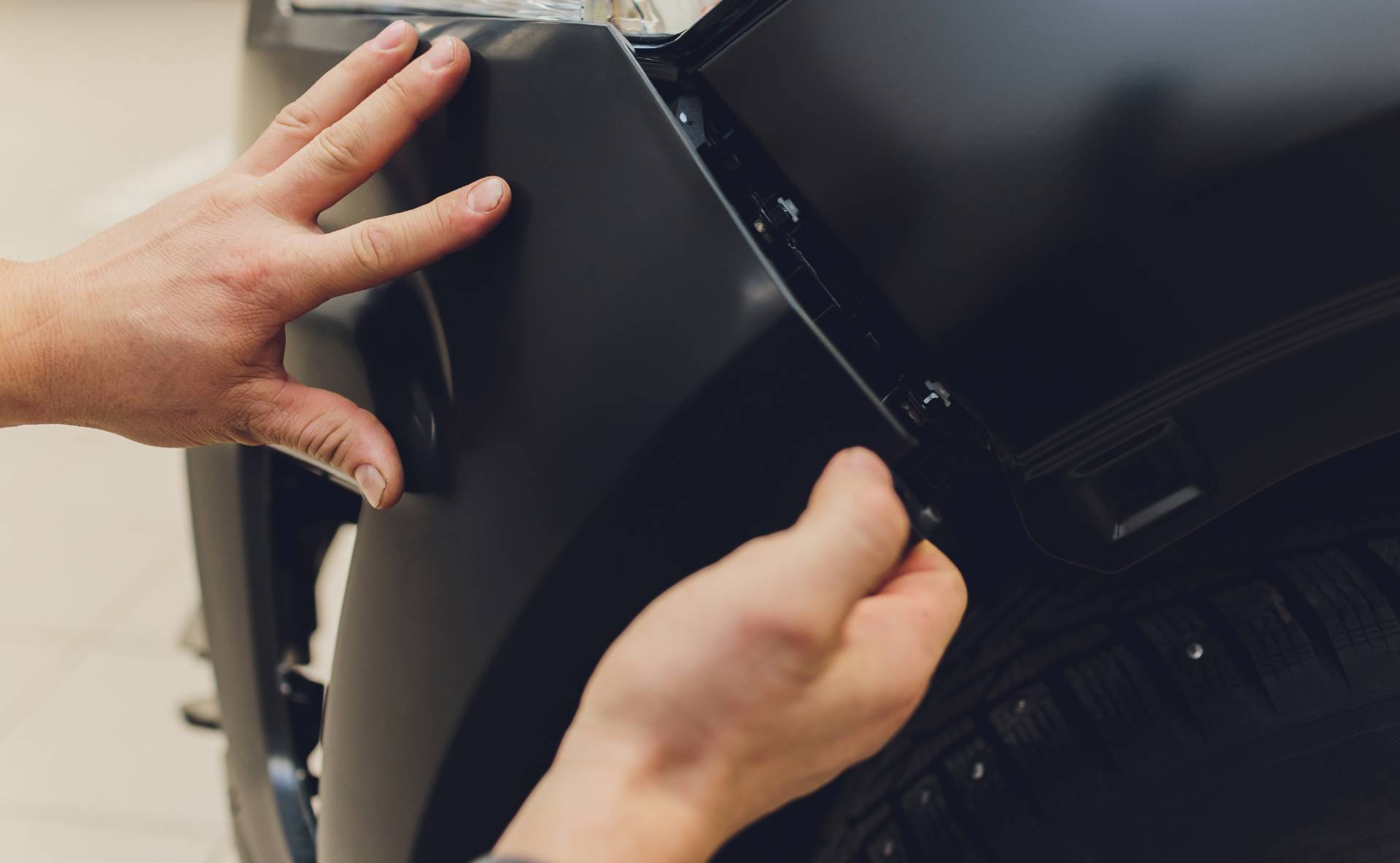
One thing worth asking the shop before you decide: is there a chance the visible damage is hiding something underneath — frame issues, sensor damage, or components that need to be removed to assess properly? A front-end impact that looks like a $600 repair can turn into a $2,000 repair once the bumper comes off and the ADAS sensors and reinforcement bar are inspected. Getting that answer before filing means you’re filing with the full picture, not an incomplete estimate.
When collision coverage is required vs. optional
If your car is leased or you’re still paying off a loan, your lender almost certainly requires collision coverage. The lender has a financial interest in the vehicle and needs to ensure it can be repaired or replaced if damaged. This requirement typically remains in place until the loan is paid off or the lease ends.
Once the vehicle is paid off and titled in your name, collision coverage becomes optional. Whether it makes financial sense depends primarily on the car’s actual cash value relative to what you’d pay in premiums and the deductible.
A rough rule of thumb used by many financial advisors: if your annual collision premium plus deductible exceeds 10% of the car’s value, the coverage may not be cost-effective. A ten-year-old car worth $6,000 with a $500 deductible and a $900 annual collision premium is close to that threshold. A three-year-old car worth $28,000 with the same numbers is a straightforward case for keeping the coverage.
Filing a collision claim: what to expect
After an accident, the process generally follows this sequence: you notify your insurer, an adjuster assesses the damage either in person or via photos, the insurance company issues an estimate, and repair proceeds at a shop of your choosing.
In Florida, you generally have the right to choose your own repair facility. Your insurer may recommend preferred shops, but you can ask to use the shop you trust. This matters because preferred shop networks are set up to manage repair costs — which sometimes means pressure toward lower-cost methods or parts that may not match the vehicle’s original specifications.
When a shop’s estimate differs from the insurance estimate — which happens regularly — the process is called supplemental. A properly equipped shop will document the additional damage and negotiate with the adjuster for appropriate coverage. This is a normal part of the claims process, not an exception.
Common questions
Insurance policies typically require prompt notice after an accident — claim deadlines and lawsuit deadlines are different things. Report the damage as soon as possible and check your specific policy requirements rather than assuming a fixed window.
Generally yes, particularly for at-fault accidents. The increase varies by insurer, your history, and state regulations. In Florida, the impact can be significant — another reason to weigh the claim value against the potential premium effect before filing.
The insurance company may declare the vehicle a total loss. In that case, they pay you the actual cash value of the car, minus the deductible. You keep the car if you choose and receive a reduced payout, or you surrender it and receive the full actual cash value minus deductible.
Yes. If an unidentified driver damages your car and leaves, collision coverage applies to your vehicle’s repair, minus your deductible. This is one of the clearest cases for carrying collision regardless of your car’s age.
Bringing your car in after a collision?
At AutoBodyLab, we work with all major insurance carriers and handle the supplement process directly when an adjuster’s estimate doesn’t cover the full scope of repair. We can give you an accurate estimate before you decide whether to file — so you’re making that call with complete information.