- What hail damage actually looks like
- The damage you might not see right away
- PDR or conventional repair: how the damage type determines the method
- What hail repair costs in the U.S.
- How comprehensive insurance handles hail damage
- What to do after a hail storm
- Hail in South Florida: less frequent, but real
- Common questions
- Hail hit your car?

The storm passed in twenty minutes. Your car was parked outside. Now you’re walking around it in the driveway, and at first glance everything looks fine — a few small marks on the hood, maybe. Then you move into the sunlight and count thirty dents across the roof alone.
Hail damage is deceptive. It rarely looks as serious as it is, and the visible dents are only part of the story.
Hail damage shows up as shallow dents on horizontal panels — hood, roof, trunk — plus potential paint chipping, cracked glass, and damaged trim or rubber seals. Small dents with intact paint are usually good PDR candidates. Deeper dents or cracked paint require conventional repair. Comprehensive insurance covers hail damage; whether filing makes sense depends on your deductible versus the repair estimate. Get the car inspected quickly — some damage worsens if seals or glass are compromised and water gets in.
What hail damage actually looks like
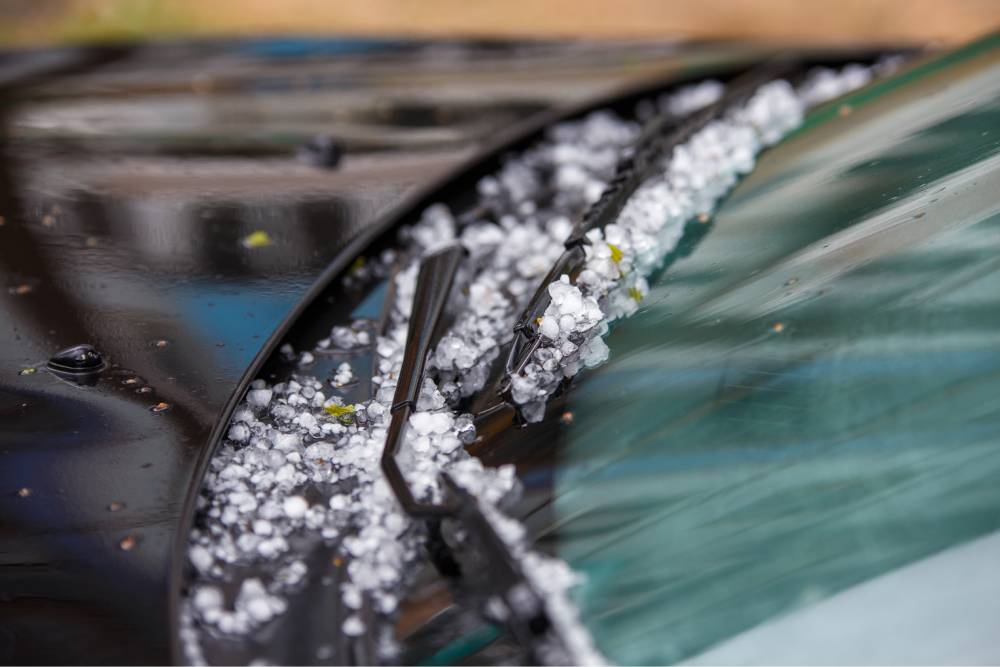
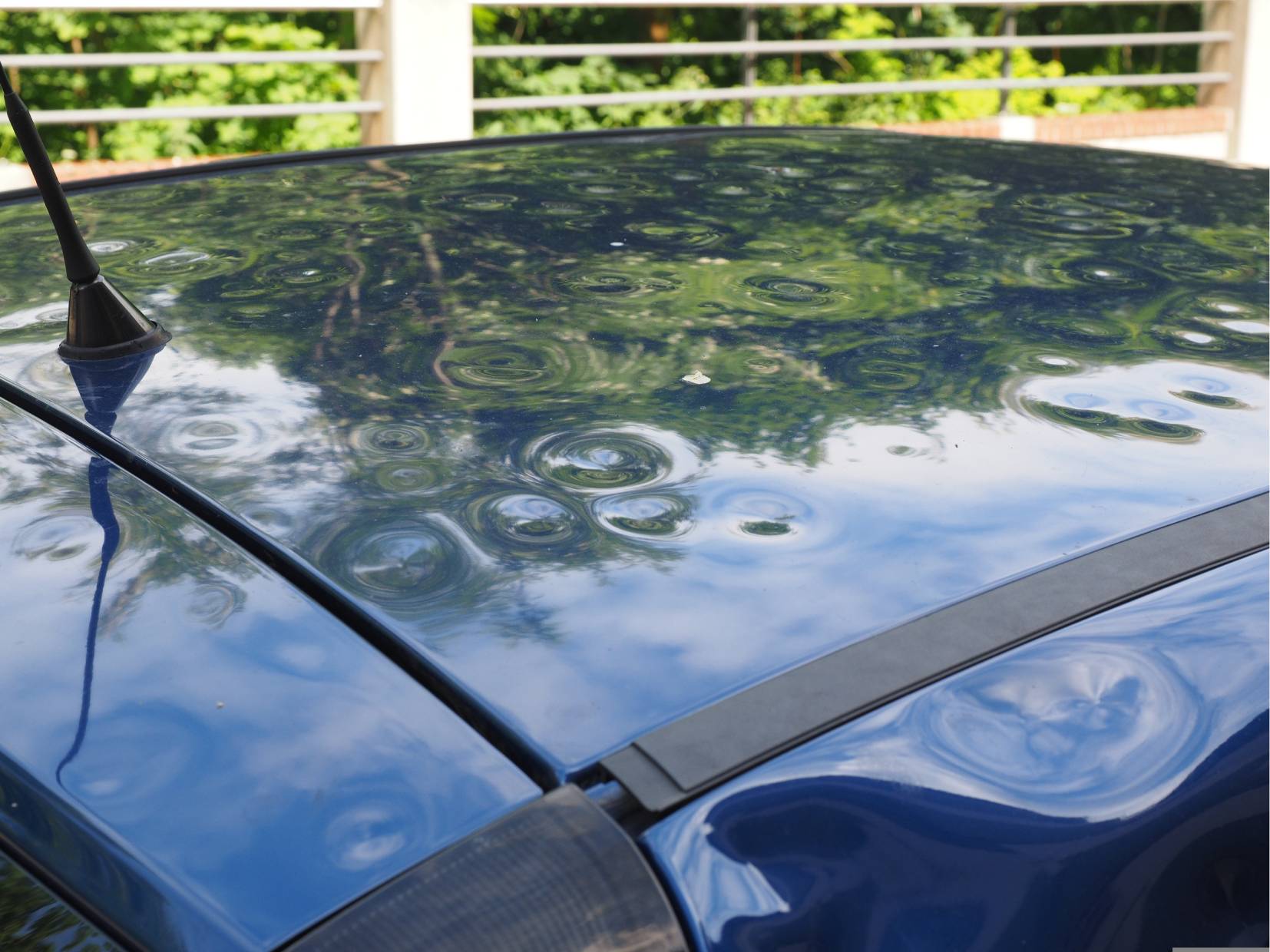
The most obvious signs are the dents themselves — shallow dimples spread across horizontal surfaces. Hood, roof, and trunk lid take the most hits because they face directly upward. Doors and fenders catch less damage unless the storm came with wind-driven hail at an angle.
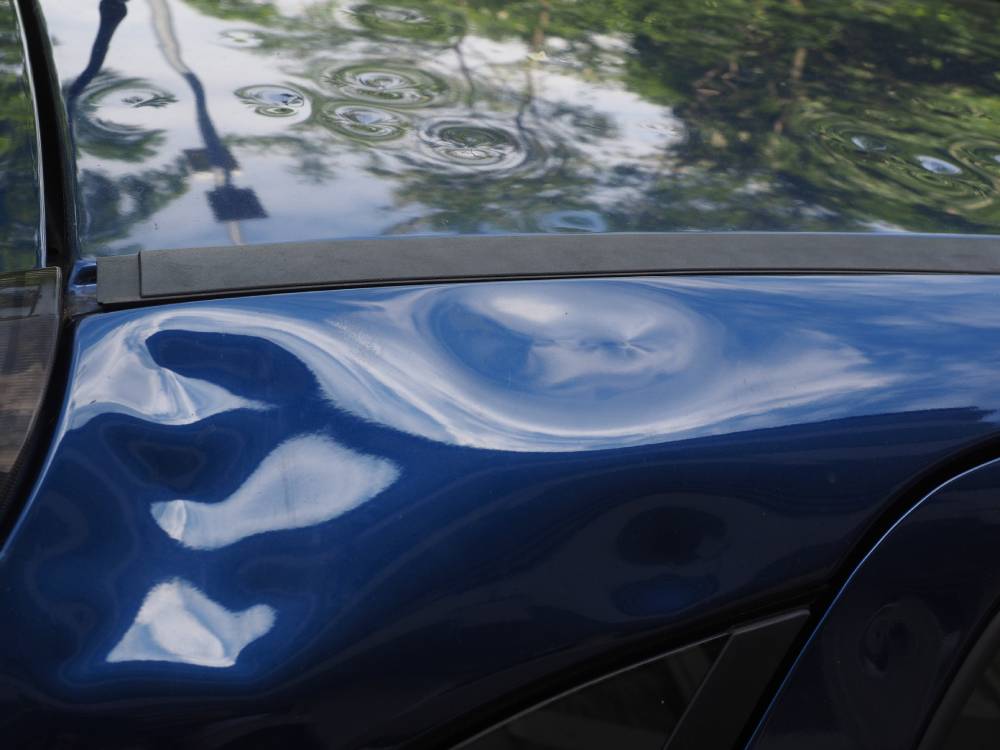
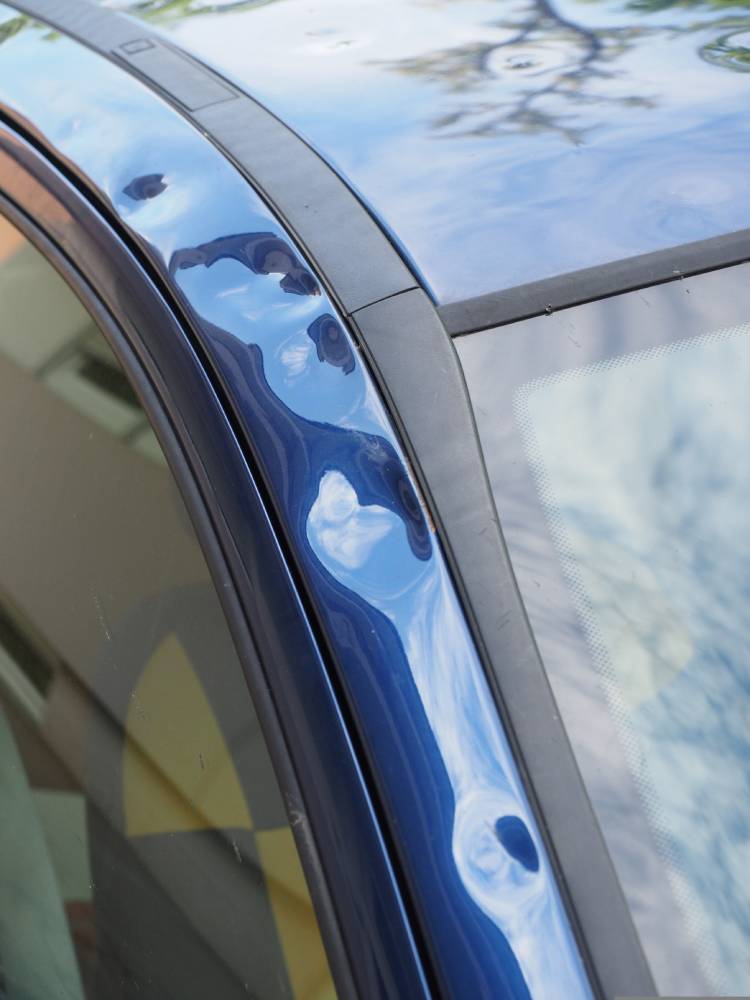
The dents are easiest to see in bright sunlight or under strong overhead lighting. The surface doesn’t always look dented straight-on; it looks distorted. Move around the car and look at panels at a low angle with light reflecting off the surface — that’s when shallow dents become visible as breaks in the reflection.
Beyond the metal panels, hail can affect:
Paint. Direct impact from large hailstones can chip or crack the clear coat and color layer. Smaller stones may leave micro-cracks that aren’t visible immediately but allow moisture to work under the paint over time, leading to bubbling or rust months later.
Glass. Windshields, rear glass, and sunroof panels can crack from hail impact. Sometimes the crack is obvious; sometimes it’s a small chip at the edge that expands with temperature changes over the following weeks.
Trim and moldings. Plastic trim pieces, mirror housings, and moldings crack or scuff more easily than metal panels. Damage here is often overlooked during a quick visual inspection.
Rubber seals. Door seals, window seals, and sunroof gaskets can be loosened or cracked by repeated impacts. Compromised seals lead to water intrusion — not immediately visible, but potentially causing interior moisture damage and mold over time.
The damage you might not see right away
Some of the real cost of hail damage shows up later, not during the initial inspection. This is why a professional assessment matters even when the car looks like it only has a few small dents.
Paint micro-cracks may not be visible to the naked eye but become apparent under UV light or when a technician inspects the surface closely. If left untreated, they allow moisture under the clear coat. In South Florida’s humidity, that process accelerates.
Glass damage that looks like a minor chip can spread. Temperature cycling — hot days, air-conditioned interiors — creates stress at the chip point. A small edge chip in the windshield after a storm can become a full crack within weeks.
Water intrusion through damaged seals is the slowest and most expensive hidden consequence. By the time it becomes visible — damp carpet, fogged windows, musty smell — the moisture has often been present long enough to affect more than just the seals.
PDR or conventional repair: how the damage type determines the method
Not all hail damage is repaired the same way. The repair method depends on the size and depth of the dents, whether the paint is intact, and what panels are affected.
PDR is typically used when: dents are small to medium, the paint is unbroken, and the panel can be accessed from behind. This describes the majority of hail damage from typical storm events — dozens of shallow, round dents across the hood and roof, with paint intact. PDR is faster, costs less, and preserves the factory finish.
Conventional body repair becomes necessary when: dents are deep enough that the metal has stretched beyond what PDR can fully correct, the paint is cracked or chipped at the impact site, or the panel edge or body line is involved in the damage. Conventional repair means filler, sanding, primer, paint, and blending into adjacent panels.
A single hail event can require both methods on the same vehicle — PDR on the hood and roof where dents are shallow, conventional repair on a spot where a larger stone cracked the paint on a door panel.
What hail repair costs in the U.S.
Pricing varies significantly based on damage severity, number of panels affected, and repair method.
PDR for small individual dents runs $75 to $200 per dent. Moderate hail damage — more dents, some requiring more work — runs $200 to $350 per dent or $500 to $1,500 for a panel set. Severe hail damage involving multiple panels with high dent density can reach $2,000 to $7,500 or more for a full vehicle.
Conventional body repair with paint costs more: roughly $600 to $2,000 or more per panel depending on the vehicle, panel size, and how much blending adjacent panels require.
In South Florida, labor rates run above national averages, which pushes all of these figures toward the higher end of their ranges.
The most important variable is how widespread the damage is. A car with ten dents on one panel is a very different job — and a very different bill — than a car with forty dents across the roof, hood, and both front doors.
How comprehensive insurance handles hail damage
Hail damage is covered under comprehensive insurance, not collision. Comprehensive covers weather events, falling objects, theft, and vandalism — not accidents. If you only carry collision coverage, hail damage isn’t covered.
Filing a comprehensive claim for hail damage is usually treated differently from an at-fault collision claim, but the actual rate impact depends on your insurer and policy — it’s worth asking your agent before filing if that’s a concern.
The deductible math still applies. If your repair estimate is $800 and your comprehensive deductible is $500, you’d receive $300 from insurance. Filing a claim for that amount may not be worth the administrative effort or any policy effects. If the estimate is $4,000 and the deductible is $500, the calculation is straightforward.
One practical consideration: get the repair estimate before filing. Some drivers file immediately, then discover the damage is close to their deductible. Getting an accurate estimate first — including any hidden damage the inspection reveals — gives you the full picture before committing to a claim.
What to do after a hail storm
Inspect the car in good light as soon as it’s safe. Don’t wait days. Move the car into sunlight or under strong artificial light and walk the perimeter, looking at panels at low angles. Check the glass for chips or cracks. Check rubber seals around doors and windows.
Document everything with photos. Take wide shots of each panel and close-ups of individual dents and any paint or glass damage. Photograph from multiple angles. This documentation matters if you file an insurance claim — adjusters will want evidence of the damage’s scope before repair.
Don’t try to assess the full damage yourself. What you can see from outside the car is part of the picture. A professional inspection — which takes the glass, seals, and trim into account, not just the visible dents — gives you the complete scope. This matters both for repair planning and for insurance documentation.
Get the car inspected before hidden damage progresses. Compromised seals and glass chips can worsen quickly, especially in Florida’s heat and humidity. Water intrusion that starts small becomes a significantly larger problem if left for weeks.
Hail in South Florida: less frequent, but real
South Florida sees less hail than the Great Plains, but hail events do occur — typically from severe thunderstorms during the warmer months, concentrated inland rather than coastal. The flat, open terrain in parts of Miami-Dade and Broward counties provides less shelter from overhead storm activity than more built-up areas.
When hail does hit South Florida, the damage pattern is consistent with what’s described above: horizontal panels take the most impact, and the combination of heat and humidity means any paint or seal damage progresses faster than it would in a cooler, drier climate.
The seasonal pattern — June through October — aligns with Florida’s peak storm period. Parking in a garage or under a covered structure during that window is the most effective preventive measure available.
Common questions
Yes — you don’t need to have witnessed the storm or know the exact date. Insurers assess the damage and the pattern of impacts, not necessarily the specific event timing. Document the damage as soon as you discover it.
PDR for moderate hail damage on one or two panels can be completed in a day. Full-vehicle hail repair with high dent density typically takes two to four days. Repairs requiring conventional bodywork on some panels take longer due to paint curing time.
Generally yes. Unrepaired hail damage is visible on inspection and reduces trade-in offers — dealers factor in the reconditioning cost they’ll need to spend. If the damage is moderate and PDR-eligible, the repair cost is often less than the reduction in sale price. Get an estimate first to make the math clear.
The dents themselves won’t spread. But if any paint is cracked or seals are damaged, the consequences — rust, water intrusion — can worsen over time. That’s why inspection is worthwhile even when the visible damage looks minor.
Look at horizontal panels — hood, roof, trunk — in direct sunlight at a low angle. Shallow dents appear as small dimples or distortions in the reflected light. Also check the windshield and rear glass for chips, and run your hand along rubber seals to feel for damage.
Hail hit your car?
At AutoBodyLab, hail assessments include a full inspection — visible dents, paint condition, glass, and seals — before we quote anything. We handle PDR in-house for appropriate damage and can walk you through the insurance process if you’re considering a claim.