Headlight restoration cost usually falls into one of three brackets: a DIY kit, a professional shop job, or full assembly replacement. Professional restoration typically costs $75 to $250 for both lenses, roughly a tenth of what replacing the assemblies would run. A DIY kit costs $15 to $40 but rarely holds up past a few months of Florida sun, and a cracked or internally fogged headlight can’t be restored at any price.
The visible yellowing says little about the price. What matters is how deep the oxidation goes and whether the lens gets sealed with a UV coat afterward. Below is what a DIY kit, a professional job, and a full replacement each cost, and where each route stops making sense.
Headlight restoration cost: DIY kit vs. professional vs. replacement
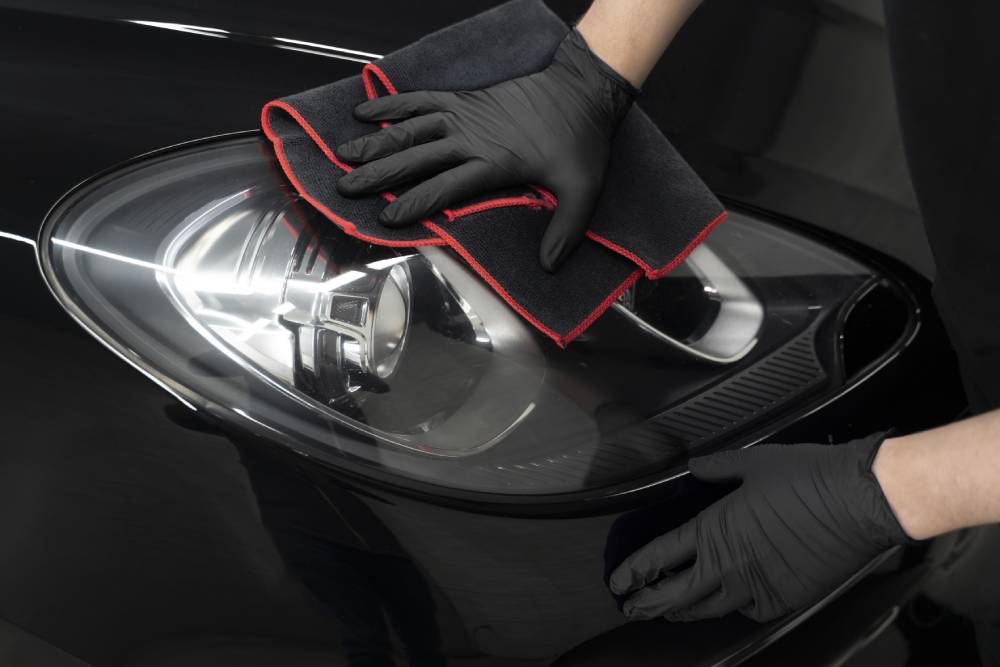
Three paths lead to a clear headlight again, and they land at very different price points. A store-bought kit is the cheapest and the least durable. A professional shop sands and polishes the lens, then seals it with a coating meant to last for years. Full replacement swaps the housing altogether, which only makes sense once sanding can’t fix what’s actually wrong with the lens.
| Option | What’s included | Typical cost |
| DIY restoration kit | Sandpaper, polishing compound, and a wipe-on UV coating from a box | $15 – $40 |
| Professional restoration (both headlights) | Staged wet sanding, machine polishing, sprayed UV clear coat | $75 – $250 |
| Full replacement (per headlight) | New assembly, installation, and aiming; more on LED and adaptive units | $250 – $1,000+ ($1,000 – $2,500+ on luxury/LED) |
The gap between the kit and the shop job isn’t really about the sanding, it’s about what happens after. A kit’s wipe-on coating, whether a basic formula or a ceramic-branded one like Cerakote, is designed to be forgiving for a first-time user, which usually means a thinner layer than a shop’s sprayed coat. Independent testing by Consumer Reports found that kits do work, often clearing up years of haze in an afternoon, but the improvement in their tests started fading within about a year. A shop sprays a UV clear coat that cures harder and lasts longer, and that durability is most of what the extra cost buys.
Some shops also layer a clear protective film over a freshly restored lens, the same idea as paint protection film on a hood or bumper: a sacrificial layer that takes minor road abrasion instead of the coating underneath it. Not every shop offers it on headlights, so ask when you book. Replacement pricing is a separate conversation, covered below, because it depends almost entirely on what’s inside the assembly.
What moves the price up or down
Two headlights in the same general condition can still land at different prices, and three things usually explain the gap.
How far the oxidation has gone
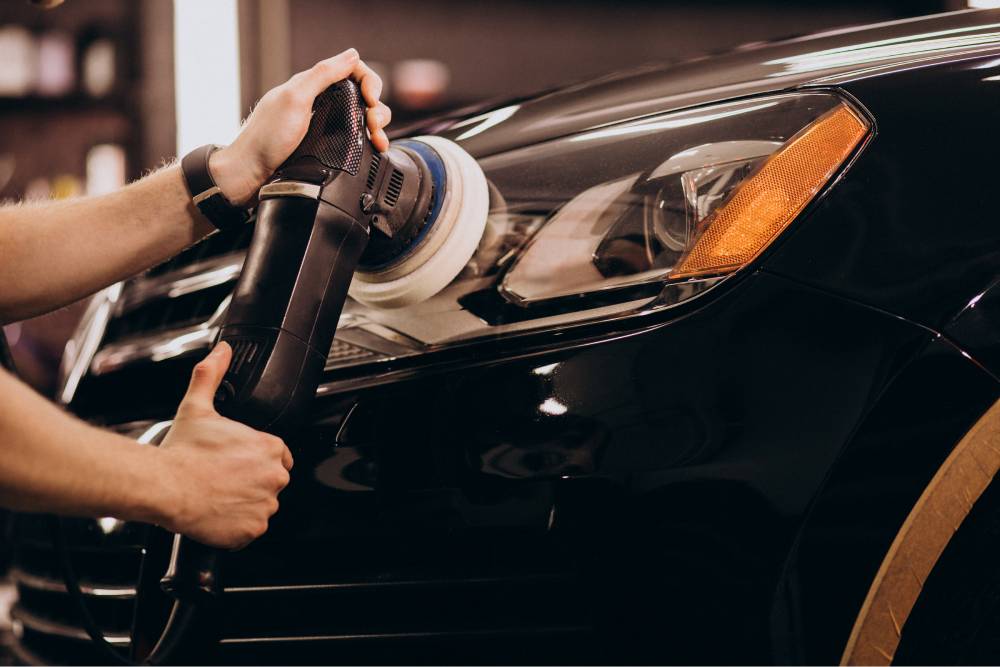
Light haze on an otherwise sound lens is a quick job: a couple of grit stages and a polish bring it back fast. Heavy oxidation, the kind where the lens looks chalky or amber rather than lightly yellow-tinted, needs more grit stages to cut through and more polishing time, sometimes a second pass. A lens that’s progressed from haze to a fine web of surface cracks is at the edge of what sanding can fix. Push past that point and the conversation shifts from restoration to replacement.
What the shop does after sanding: the sealing step
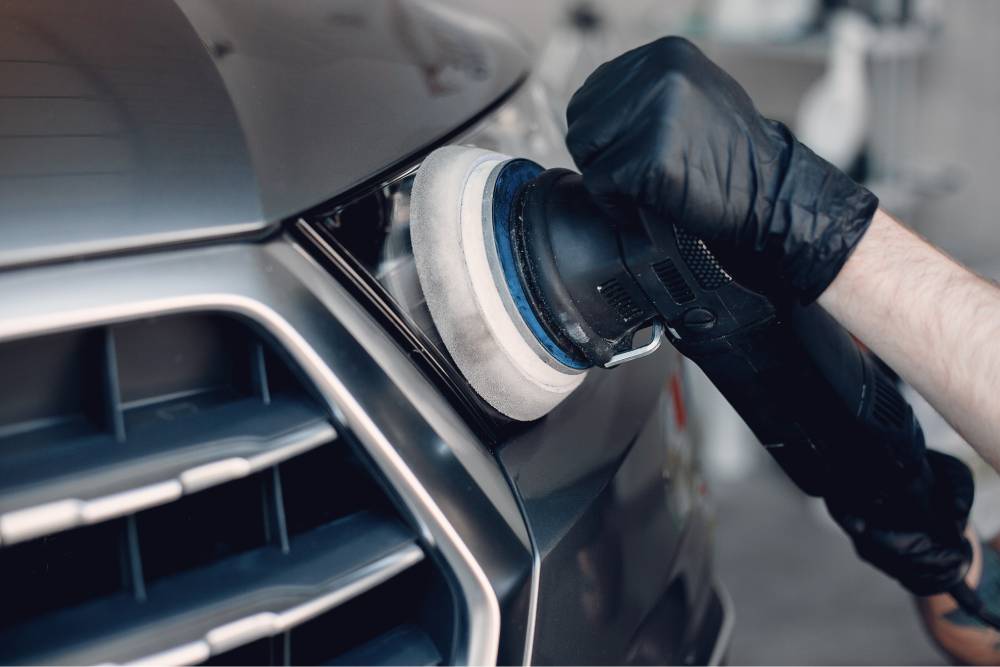
Sanding removes the oxidized layer. It doesn’t put anything back. A lens left bare after polishing has no UV protection at all, worse off than before the job, since what was left of the factory coating is now gone entirely. The sealing step sprays a fresh UV-blocking clear coat over the sanded plastic, restoring roughly the protection the lens had when the car was new. That coat is most of what separates a kit result from a shop result, and it’s the line between a restoration that lasts years and one that’s yellow again by fall.
Lens size, shape, and luxury assemblies
A compact sedan’s small, flat headlight takes less time to sand and polish than a full-size SUV’s larger, curved unit, and that labor time shows up in the price. Complex projector and LED housings with multiple lens facets take longer to work evenly than a simple reflector headlight. On luxury and exotic vehicles the assemblies are also expensive to replace, sometimes running into four figures a side, which is exactly why restoration is worth pricing first on the cars where a new assembly costs the most.
Why cheap fixes don’t hold: toothpaste, sunscreen, and polish-only jobs
A search for how to fix cloudy headlights turns up the same handful of home remedies every time. Most of them do something, just not quite what people think.
Toothpaste. The mild abrasive can buff out the top layer of haze on a lightly oxidized lens, the same principle as a fine polishing compound. It doesn’t seal anything afterward, so the improvement is cosmetic and short-lived: bare plastic left exposed to sun starts hazing again within weeks.
Sunscreen. This one gets searched a lot, and the logic sounds reasonable at first: sunscreen blocks UV on skin, so it should block UV on plastic too. It doesn’t work that way. Sunscreen isn’t formulated to bond to polycarbonate, and the SPF number measures protection for skin, not for a headlight lens. Any temporary shine comes from the oils in the product filling fine scratches, and it rinses off in the next rain or car wash.
Polish-only jobs, whether DIY or a quick shop upsell, run into the same problem as the toothpaste trick at a larger scale. A machine polish makes a lens look clear the day it’s done, but polishing alone strips away what little factory coating is left without replacing it. That lens is now less protected than before the polish, so the yellowing that took years to show up the first time can come back within a single hard summer.
The pattern holds across all three: what gets the haze off matters far less than what goes back on afterward. A kit or a shop job that includes a real UV sealing step is doing something toothpaste and sunscreen never will.
When restoration won’t work and you’re pricing a replacement
Sanding only fixes damage on the outside of the lens. Anything on the inside, or anything structural, means restoration isn’t an option and the conversation moves to replacement.
Condensation that keeps coming back is the most common of these. Headlight housings breathe through small vents, and when a seal fails or a bulb access cap isn’t seated right, humid air gets in and fogs the inside of the lens. Polishing the outside does nothing for that. A corroded reflector inside the housing is worse: the mirrored surface doesn’t come back once it’s pitted, so the fix is a new housing rather than a cleaned one. A cracked lens or a broken mounting tab, usually from an impact or a collision, is the clearest case of all. There’s nothing left to sand.
Replacement cost depends heavily on what’s inside the assembly, and searches for headlight lens replacement usually end at the same place: on most modern cars the lens and housing come as one sealed unit, so the whole assembly gets replaced rather than the lens alone. A basic halogen unit on a mainstream sedan sits at the low end of the range, starting around $250 installed. A sealed LED, projector, or adaptive headlight, common on newer and luxury vehicles, can run $1,000 to $2,500 or more a side installed. The job also includes aiming the beam to the correct pattern, since a headlight bolted in but never aimed can put more light into oncoming windshields than onto the road.
There’s a parallel worth noting here. A clouded headlight lens and a windshield that needs windshield replacement cut into night visibility for the same reason: light scatters instead of passing through clean. If your car needs both, it’s worth pricing them together in one visit.
Yellow headlights and the Florida sun
Yellow headlights show up on cars everywhere, but Florida runs the clock faster than most of the country. The UV index stays high nearly year-round, and most cars here spend their lives parked outside rather than in a garage. Salt air off the coast adds its own etching on top of the sun damage. Oxidation that takes six to eight years to show up in a milder climate can show up in three to four years here.
It’s the same mechanism as what Florida sun does to clear coat: UV breaks down a thin protective layer, and once that layer is gone, whatever’s underneath starts to degrade out in the open. On a headlight, the color is what you notice in a parking lot. The beam is what you notice on a dark road: AAA testing on aging headlights has found some producing as little as a fifth of the light output they had when new. Add a Florida summer downpour and the margin shrinks further, because a hazed lens scatters light into the rain, more glare for oncoming drivers and less lit road for you.
Getting a quote
Every range above assumes typical oxidation and a standard assembly. The only way to get a firm number is a quick look at the lens in person: how deep the haze goes, whether the fog is on the outside or trapped inside the housing, and what the assembly would cost if replacement turns out to be the right call. AutoBodyLab’s professional headlight restoration starts with that inspection, so the quote covers the job your headlights actually need. Most inspections take a few minutes and end with a firm price rather than a range.
FAQ
Professional restoration of both headlights typically runs $75 to $250, depending on how deep the oxidation goes and whether the shop seals the lens with a UV coating afterward. DIY kits cost $15 to $40, and full assembly replacement starts around $250 per headlight and climbs past $1,000 on LED and luxury units.
Restoration is far cheaper when the damage is on the outside of the lens: yellowing, haze, and fine scratches. Replacement only wins when the problem can’t be sanded away (a cracked lens, moisture inside the housing, a corroded reflector) or when the assembly is already damaged from a collision.
They can clear up early oxidation, and the sanding steps in a good kit are sound. The weak point is the protective layer: wipe-on coatings from a box rarely survive long under strong sun, so the yellowing returns within months. The durability gap, not the polishing, is what a shop is really being paid for.
No. Yellowed and hazy lenses are wear from sun and age, which policies treat as maintenance, so restoration is paid out of pocket. A headlight broken in a collision is different: the assembly, brackets, and aiming belong on the insurance repair estimate for that accident.
Ready to get your headlights looked at?
Auto Body Lab restores and replaces headlights on sedans, SUVs, pickups, and luxury vehicles, including sealed LED and projector units. Certified technicians check whether the damage is on the surface or inside the housing before quoting anything, so you’re paying for the right job. The work ends with a sprayed UV clear coat rather than a bare polish, which is what holds up under North Miami Beach’s UV and salt air.