

Paint correction cost typically runs from $150 for a light 1-step gloss polish up to $1,500 or more for a full multi-stage correction on paint with heavy oxidation or deep swirl marks. Where a given car lands in that range depends on how much clear coat needs to be leveled and what kind of defects the paint is carrying. Here’s the cost by stage, and when correction beats a full repaint.
Those numbers cover a wide swing because a 1-step polish and a 3-step correction are different jobs, not just different prices for the same one. Below is the cost by correction level, the factors that push a quote up or down, and how to tell paint correction from a full repaint or a scratch repair.
Paint correction cost by correction level
Paint correction pricing splits into levels because each one addresses a different depth of clear coat damage rather than a different amount of polishing time. A 1-step gloss enhancement is a single light pass that lifts haze and fine swirl marks. A 2-step correction adds a compounding stage before the polish, which is what most cars with moderate swirling and light scratching actually need. A 3-step, full correction works through heavier oxidation, deeper marring, or damage that has built up over years without any protection, and it’s the tier that gets a finish close to show quality.
| Correction level | What it includes | Typical range |
| 1-step (gloss enhancement) | Light polish, removes minor swirl marks | $150 – $400 |
| 2-step (moderate correction) | Compound + polish, removes moderate swirls and light scratching | $400 – $800 |
| 3-step / full correction | Heavy oxidation, deep swirls, show-level finish | $800 – $1,500 |
| Full correction + ceramic-ready prep (luxury / exotic, larger body) | Full-scope correction ahead of a coating application | $1,500 – $3,000+ |
None of these figures are a quote. A technician has to see the paint under proper lighting to know which level a car actually needs, which is part of professional paint correction before any work starts. For a closer look at what each pass does to the clear coat, what paint correction actually removes breaks the mechanics down stage by stage.
What moves the price up or down
Vehicle size and panel count
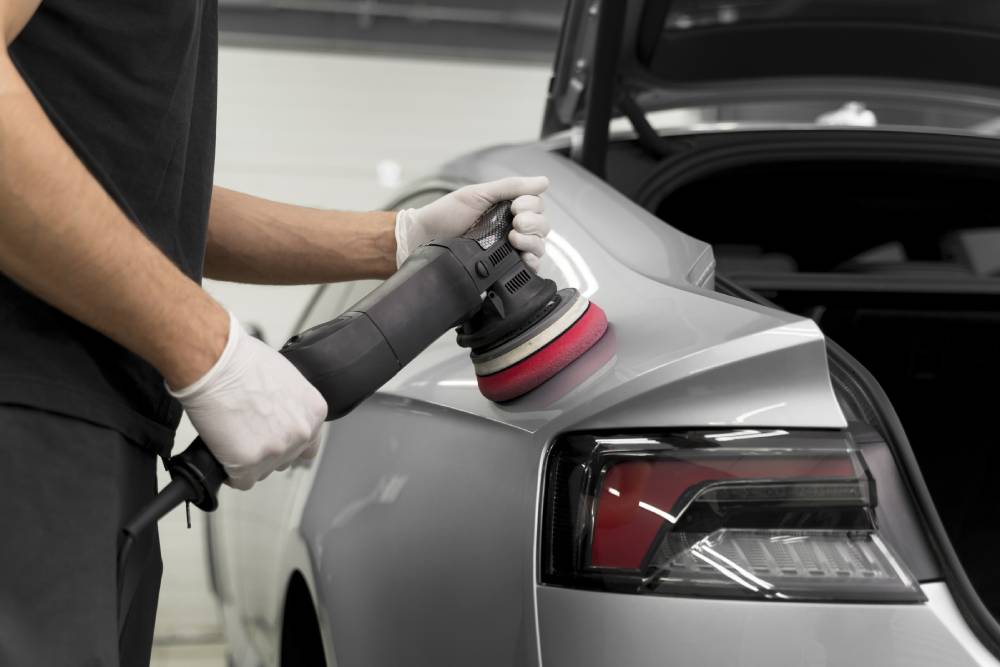
A two-door coupe has fewer panels to correct than a three-row SUV or a crew-cab truck. Every additional panel adds machine time. A dual-action polisher or rotary buffer has to work each panel individually to level the clear coat, and a quick wipe over the surface won’t do that. Deep body creases, extensive trim, and tight-radius curves near mirrors and door handles slow the pass down too, even on a car with a similar overall footprint. That’s why panel count and body size move a quote within the same correction level: a compact sedan with a straightforward body sits at the low end of its tier, while a larger SUV or a vehicle with more distinct panels lands higher for the same amount of correction.
Paint condition: swirls vs. oxidation vs. deep marring
Not all dull paint has the same cause, and the cause decides the level of correction needed. Fine swirl marks, the kind left by an automatic car wash or a dirty wash mitt, usually respond to a 1-step polish. Oxidation, where the clear coat has broken down from years of UV exposure, needs a compounding stage before polish can restore gloss. South Florida’s intense year-round sun accelerates oxidation faster than in most of the country, and sprinkler overspray and touchless car wash brushes add hard water spots and fine marring on top of it. Deep marring or scratches are a different story, and what decides the fix is depth, not how the mark feels under a fingernail. A nail catching on the edge is only a first check: if the color underneath still looks intact, correction can usually remove it. Once a scratch cuts through to the base color or primer, that’s scratch repair territory, and no amount of polishing fixes it.
Correction level needed (1-step / 2-step / 3-step)
The level itself is the single biggest price driver, more than any other factor on this list. A 1-step polish on a car with light swirling might take half a day. A 3-step correction on a heavily oxidized hood and roof, the panels that take the most sun, can take a full day or more per section of the car. Technicians typically start with a test spot on an inconspicuous panel to confirm how much correction the paint can handle before committing to a level for the whole vehicle, since pushing a heavier compound than the clear coat needs risks thinning it too far.
Paint type and luxury / exotic finishes
Matte, satin, and some ceramic-coated factory finishes can’t be corrected the same way as standard gloss clear coat, and some can’t be corrected at all without ruining the finish. Exotic and luxury paint, common on the vehicles this shop sees most, often uses softer clear coat that marks easily but also responds well to correction, which is one reason these cars show up for a 1-step gloss refresh more often than economy vehicles. Multi-stage tri-coat and pearl finishes take longer to correct evenly because the reflective particles make uneven polishing more visible than on a solid color.
1-step vs. 2-step vs. 3-step correction: what’s actually different
The step count refers to how many distinct passes the paint gets. It has nothing to do with how many hours a job takes. Each step uses a different combination of compound, pad, and technique. Skip a step, and the defects it’s built to remove stay in the paint.
A 1-step correction is a single pass with a finishing polish on a foam pad, run on a dual-action polisher. It’s designed to remove light swirl marks and haze without cutting into the clear coat more than necessary, and it leaves a noticeably deeper gloss on paint that wasn’t badly damaged to begin with.
A 2-step correction adds a compounding stage first, using a cutting compound on a firmer pad to level out moderate swirling and light scratches, then follows with the same finishing polish a 1-step job uses to remove the haze the compound leaves behind. This is the level most cars with a few years of regular washing and no real protection actually need.
A 3-step correction adds a heavy-cut compound stage, sometimes run on a rotary buffer instead of a dual-action polisher for more aggressive leveling, before the compound and polish stages that follow. Rotary buffers remove more material faster, which makes them effective on heavy oxidation but risky in inexperienced hands, since they generate more heat and can burn through clear coat if a pass sits too long in one spot. This is also the stage where a paint thickness gauge matters most, since a technician needs to know how much clear coat is left before committing to an aggressive cut.
Paint correction vs. a full repaint: how to tell which you need
Correction and repainting solve different problems, and mixing them up means paying for the wrong service. Paint correction works entirely within the existing clear coat: it levels, not covers, and it only works as long as the defect hasn’t broken through to the base color or bare metal underneath. A repaint replaces the finish outright, primer and all, which is why a full repaint costs more than even a heavy 3-step correction in nearly every case.
The simplest way to tell which one applies: run a fingernail lightly over the defect. If it catches on a scratch but the color underneath still looks intact, correction is worth trying first. If the color has changed, or there’s visible primer or bare metal in the scratch, correction can’t fix it and paint is the only real option.
Age and condition of the clear coat matter too. A car with an intact clear coat that’s simply dull, swirled, or lightly oxidized is a correction candidate almost every time. A car where the clear coat has failed across large panels, peeling, cracking, or flaking away from UV breakdown, usually isn’t a good correction candidate even at the 3-step level, because there’s not enough healthy clear coat left to level. At that point, a repaint is the only real fix.
Why paint correction usually comes before a ceramic coating
A ceramic coating bonds to whatever is on the car’s surface when it’s applied, swirl marks, haze, and light oxidation included. Coating over uncorrected paint locks those defects in for the life of the coating, which typically runs one to several years depending on the product, so skipping correction first doesn’t save money. It just delays the cost and adds a layer that has to be stripped before the paint can be corrected properly later.
That’s why correction is treated as prep work for ceramic coating rather than an optional add-on. A full correction pass ahead of a coating application is also where the pricing tier for ceramic-ready prep on larger or luxury vehicles comes in, since the coating stage itself needs a completely level, defect-free surface to bond evenly across every panel. For a daily driver in a coastal climate like North Miami Beach, that sequence matters even more, since a coating applied over lightly oxidized paint traps UV damage under a layer that’s built to resist exactly that kind of breakdown.
Getting an accurate quote
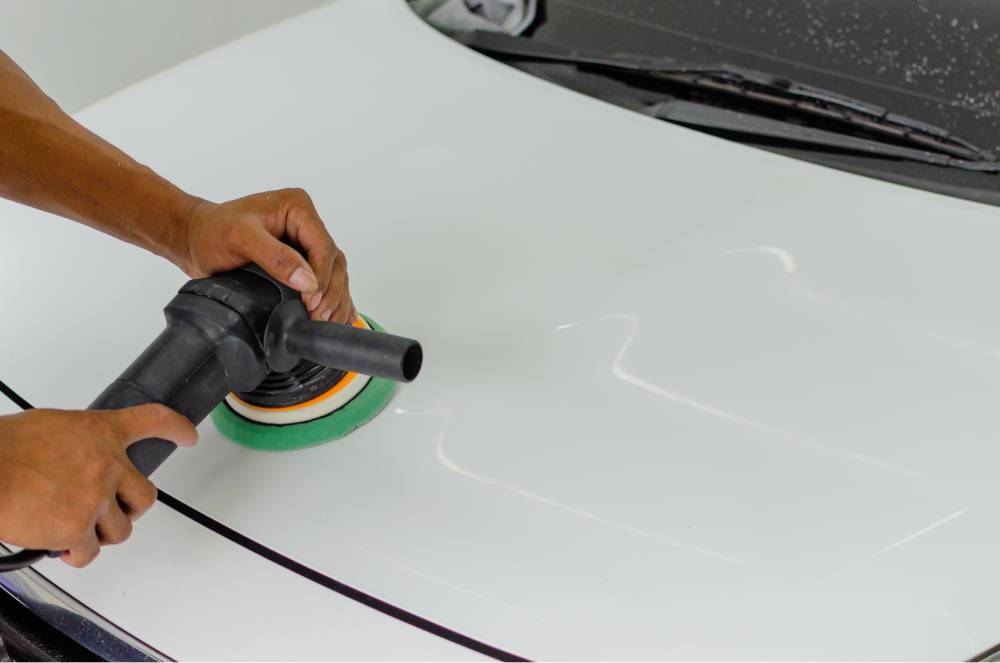
Every range on this page assumes typical conditions, and the only way to get an exact number is to have the paint looked at in person under proper lighting. A technician runs a test spot on an inconspicuous panel, checks paint thickness where oxidation or prior corrections are suspected, and confirms whether the defects sit within the clear coat or go deeper. Two cars of the same make and model can land at opposite ends of the same tier depending on wash history and prior neglect, so a quote based on photos or a phone description is always a rough guess at best. Most correction assessments take well under an hour and end with a firm price broken down by level instead of a single number pulled from an average.
FAQ
Most jobs run $150 to $1,500, depending on how many stages the paint needs. A quick 1-step gloss polish sits at the low end, and a full 3-step correction on heavily oxidized or deeply swirled paint lands at the top of that range.
A 1-step correction is a single light polish that removes minor swirl marks and restores gloss. A 3-step correction adds a compounding stage and a finishing polish, needed when the clear coat has deeper marring, oxidation, or scratches a single pass can’t remove.
No. Paint correction is a cosmetic and maintenance service, so it’s paid out of pocket rather than billed to a claim. Insurance applies when the paint damage traces back to a collision, hail, or another covered event.
Often yes, on a car with swirl marks or dull clear coat but no deep damage. Correction restores gloss and depth without repainting, which can improve how the car photographs and appraises, at a fraction of a repaint’s cost.
Get an accurate paint correction quote
Auto Body Lab handles paint correction at every level, from a quick 1-step gloss refresh to full multi-stage correction and ceramic-ready prep, at 15150 W Dixie Hwy in North Miami Beach. Certified technicians assess the paint in a controlled, dust-free bay with OEM-safe polishing compounds, and every job starts with a written assessment before any machine touches the car. If oxidation or scratching on your car traces back to a covered event, we work with GEICO, State Farm, Progressive, and Allstate to sort out what’s included.